In 2023, I watched a documentary ‘India: A Country that Doesn’t Like Women’, featuring the story of Shamba, an Indian woman from a village in in Rajasthan who confessed to maternal filicide, helplessly killing her baby with sand, in line with the female infanticide traditions of her village. She narrates how her other daughter was suffocated with sand hours after her birth by her mother-in-law and sister-in-law. I often wondered about the ghost and guilts that haunted Shamba and the details of her life afterwards. In Rajasree Variyar’s debut novel, I am finding answers.
Her husband Darshan did not make things better, his mother’s words was law. On days when he was sober enough, his voice was kind, but there was iron in it. He reminds his tired and sleepy wife that sleep is not for women that birth daughters: ‘Sleep! A wife should be asking for sons, not sleep.’ Other times, Darshan re-echo’s his mother’s mean words: ‘We can’t afford another girl, you know it… what are we going to do? Even if we stopped eating, we couldn’t pay another damned dowry.’
In her grief, she pulled out her prayer from the dark recess in her mind from the black solid mass that her grief had become: Anything. Please, Bhagavati, I’ll do anything. Just give me a boy. Another baby I can keep.’ There are days she wondered why her husband Darshan could not save their two daughters who lay cold under the coconut palm.‘What would the other two look like now, if they had been allowed to live? For her mother-inlaw, she mental pile of forbidden words, yet she wonders, ‘what had life done to her to shape her this way?’ For Kamala the midwife, memories of her was unpleasant, ‘the midwife had been there every time. She’d known what would happen and done nothing to help.’ Seeing her beloved friend Shubha go from grief of losing her newborn daughter, slipping into severe depression and finally hanging herself on the ceiling beam in an act of suicide made her appreciate the weight of the burden women like them carried: ‘Sometimes the pain becomes too much to bear… and some people feel it too much more strongly than others. The burdens of their lives feel heavier to bear,‘ Kamala explained.
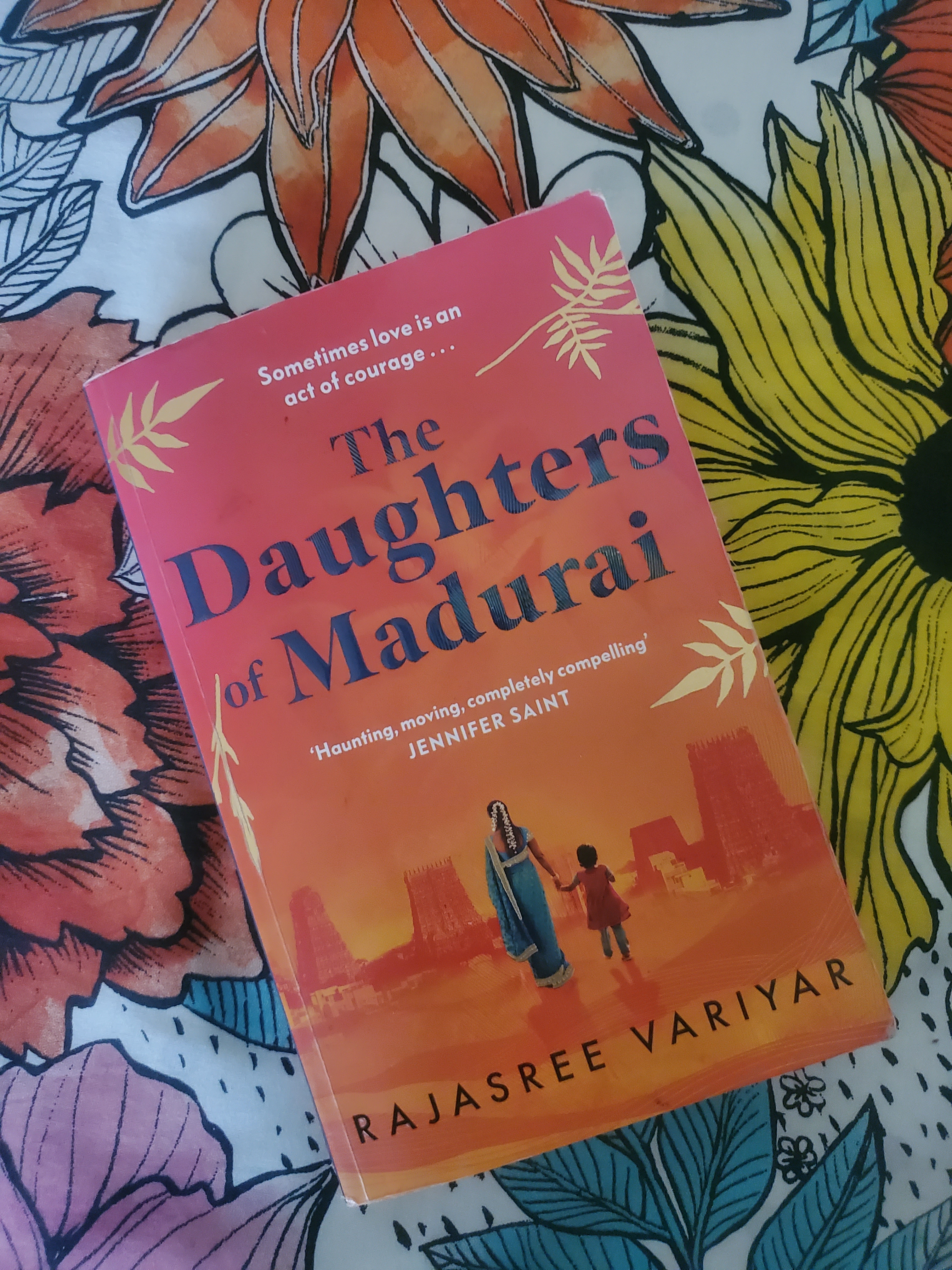
Set in the Indian town of Madurai in Tamil Nadu, India, the novel centers the character of Janani, a woman living in a community where a girl is considered a burden and a curse. ‘All of Madurai is a shrine. They call it the City of Temples… the people are not anymore holy though.’ Here, silence after a child is born is a way of knowing ‘it’s a girl’, deserving of death. Their infant daughters are buried with no sprinkling of holy water over their body and no funeral rites. Cry of murdered baby girls should hover around this village.
Janani is a mother grieving the killing of her daughters by the family that should love her. Her life was framed by a cruel mother in-law Vandana, a drunk and unloving husband Darshan and parents who will rather have her dead than leaving her marriage.For birthing daughters, Janani’s days were marked with Irritable glare, inscrutable looks,hard words and cruel actions of her mother-in-law:
‘Girls and more girls, is that all you can bring to this house? Are you trying to riun us?’…‘If you bring another girl under this roof, you can go…You’re out of this house. You can crawl back to your parents. They can feed you and your little cows. They can break their back for the dowries.’Vandhana said. For Vandhana, the killing of the girl child was a thing of pride, and giving them away was dishournorable: ‘Do you know how many girls I sent back to Meenakshi Amman? If I had not, we would be living in the street, eating dust.‘
Meeting with Kamala to save Shubha, made her understand the paradox of Kamala’s life, and unlike other midwives who killed, she too was a victim: ‘My sister died, when I was a girl. She had already had her first child, a strong little boy. But her husband beat her, very badly, even after his son came. Every day. Her dowry was not enough, he said, and that our father had promised him more. When he broke her arm, our father gave him another five hundred rupees, which he had been saving for my dowry. But the beatings continued… So my sister walked into the river one day, during the rains.’ Kamala was a beacon, in choosing the road less traveled, her choices made her a light house for younger women who choose to dare:
‘I swore then that I would never marry. I ignored my amma and appa. I worked hard, for myself, for them. Not living a slave to a man and his family. Beaten everyday. Raising his boys. Killing his girls… I chose a life that’s lonely, sometimes and hard. But it’s my life… we women have hard lives…but let’s start making our own fate.’
Janani felt like a wilted flower, like cloth fading in the sun, but now she is pregnant again and nothing has changed. Relating with Vandhana still felt like biting into a lime: ‘The useless thing,’ she said, voice sharp with disgust. ‘Just like the last one. It’s not worth any more thought.’ To poison her pregnancy, Vandhana offered drinks of gooseberry juice or other herbal remedy Janani didn’t want, ‘Rid us of them before they come.’ Fool! Vandhana snaps. In place of rice vegetables lentils, fish and chicken, ‘Vandhana has always insisted warm rice and yoghurt was the only thing an expectant mother should eat.’ Watching Vandhana move away from the hospital consultation room where she imposed her presence felt ‘as though a cloud had moved from over the sun.’ Pregnancy scans where marked with unspoken questions hovering around the room, and the overwhelming prayer ‘please, Devi, a boy…’
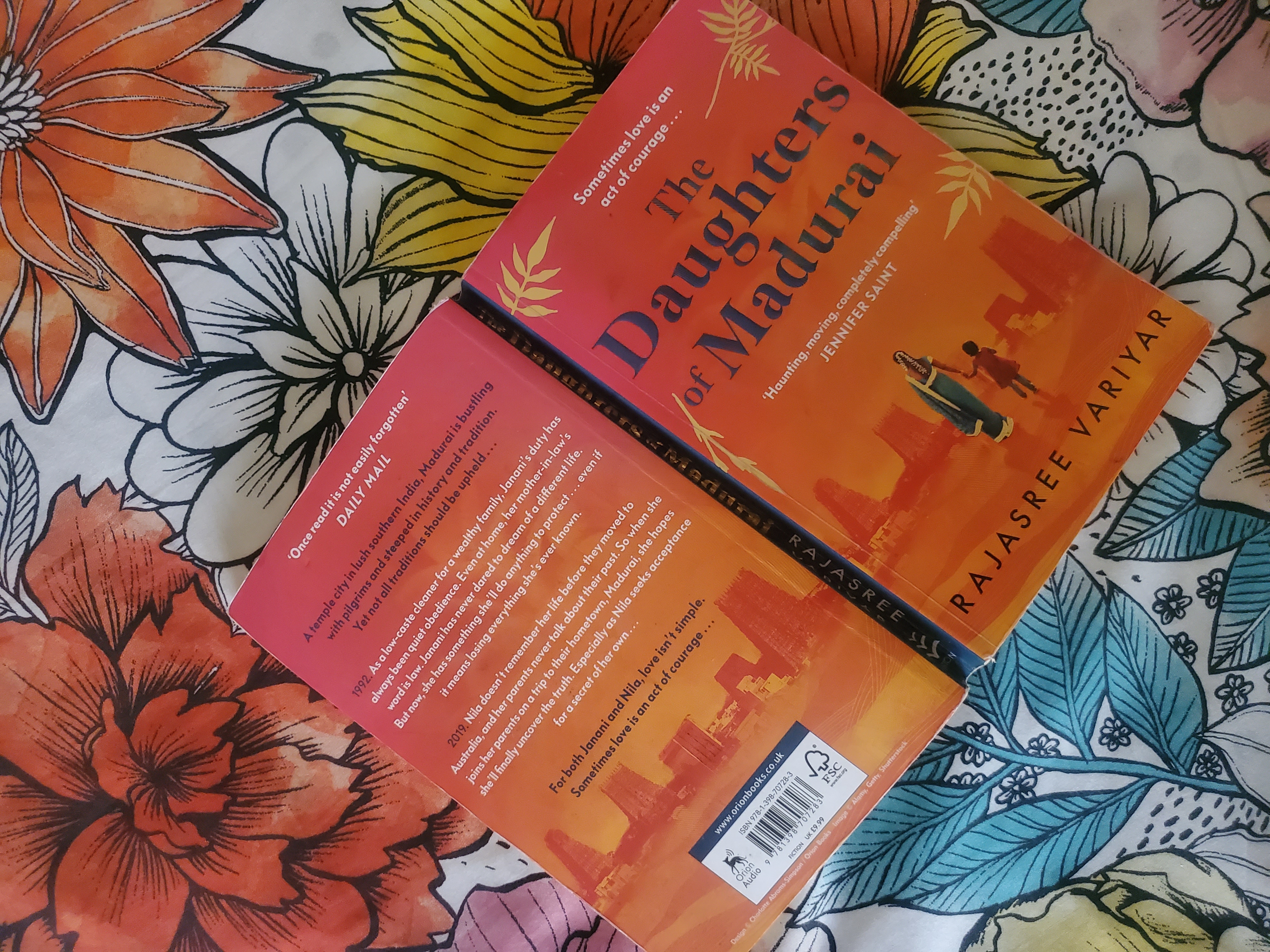
Female infanticide, the sex-selective killings of newborn female children due to a preference for male children occurs in countries like China and India, but has stood at epidemic proportion in India even before the pre-colonial era. Demographic data collected in India in the 1800s CE, showed that in some villages, there were no female infants. In 1993, within the Usilampatti area of Tamil Nadu where this novel is set, 196 female infants died under suspicious circumstances in 300 poor hamlets. As with many development challenges, several interventions are designed to address this. This novel captures one of such. The Government’s answer was a ‘cradle baby scheme’. The cradle, a ‘Grim, stainless-steel cages, with only a few layers of blanket to shield soft baby skin from the cold, gridded base.’ People who did not want their babies could leave them on a dark night in a crib that was more like a prison. Jayalalitha’s scheme was created to try ‘to protect the baby girls of Tamil Nadu after the Media Frenzy around Dharma-puri and Salem and Usilampatti the year before. The stories had leaked out of India, and now everywhere, in America and Britain and Australia-tales of baby girls fed oleander sap and rice husks, left to froth and choke and die alone, unwanted.’
Following the design of many development program is the implementation and uptake by beneficiaries. Sadly the people Usilampatti area of Tamil Nadu just like Vandhana, ‘think its worse to give your child away, your child who belongs to you. Admitting that you can’t look after her, but that you don’t have the courage to do what you should do…If you have brought her into this world, you should send her back to Meenakshi.’ The poor success rate of these intervention show why even in current times, female infanticide was still a social development problem. According to Journalist and filmmaker Amitabh Parashar who has followed the story of female infanticide in India for over three decades, ‘the sad part is that female infanticide is still rampant. I still get calls every day about at least one of these incidents in my state.’
In reading this novel, I feel gratitude to Rajasree Variyar for the discernment she blessed me with on this issue. Although the structure of this novel follows two women across decades, for me the twist of Nila’s sexual orientation and coming out story was dwarfed by the value Janani’s story adds to social development discourse.’There are so many ways for the poor to die in India,’ and this book shares one of such. Reflecting on this story, I am sometimes imagining the image of baby girls, squirming and crying, alone on a wet night, or enduring the thought of babies held in blue-veined hands of their murderers. At other times, I find myself praying along with Janani and Shubha, not for a boy, but that the unwanted daughter (“phekiya:the one who was thrown out”) will find love in families who can afford to raise her and educate her and offer her a comfortable life. However, it is not lost on me that for many communities in India, the girls left alive will be the girls left behind.
Written by~ Adaobi Nkeokelonye
Leave a Reply