Category: Uncategorized (Page 1 of 3)

Stories That Stay in Their Own Language…

In Montenegro, I am that stranger suffering profound language incompetence. Though surrounded by people speaking their mother tongue, my incompetence made their words feel like noise. Here I could feel the culture, but I could not participate in its wit, its gripes, or its secrets. I could only make out solitary English words. I am feeling the stark isolation of being in a city that just won’t speak back.

I walked through the tangle of streets in Podgorica, probing the shelves of its Highstreet bookshops, hoping to find a contemporary English Novel I could call their own. Days passed and I am left with little or no choice. I sought for ‘Catherine the Great and the Small’ by Olja Knezevic, which is considered the first contemporary novel by a Montenegrin woman author to be published in English translation. Although I wondered at what must have been lost in translation, there was no copy to be seen, held or read.

I was excited to find Ivo Dandrick’s ‘The Bridge on the Drina’ (Na Drini ćuprija); a novel instrumental to his winning a Nobel peace prize for literature in 1961. Though from the Balkans, Ivo Danrick is profiled as a Serbian author, writing long before Montenegro declared independence.

A part of me is proud of Montenegro for proudly flaunting their mother tongue in a world where English oppresses other languages, but the other part of me mourned the fact that in this Balkan nation, I may not learn about this beautiful country, or these tall, gorgeous men and women of the black mountains who I admire, through the lens of their novels. I had questions I wanted to answer: in this land where people carried themselves with pride, wrapped in quiet dignity, how does poverty reveal its face? In its quiet performances of being, are boys and girls blooming differently, do their men and women radiate differently? what are the norms the land whispers to its children from the cradle? But like many other spaces across the world, this one has not folded to yield to me answers that are dressed in English.

A sculpture of Alexander Pushkin and his wife Natalia Goncharova located in Podgorica.

Gradually, I am accepting that I am nursing my entitlement, expecting every shore to echo the language I know and that every country’s pen must ache to bleed in English. Why am I am here desiring that their stories are stripped down and re-dressed in English? I dial up my inner conflict, and it ripples on me: ‘If I cannot speak their language, why should I expect them to read or write in mine?’ I feel a sting of guilt identifying with English language as mine at the expense of the Igbo that first shaped my world. Therein lies the lingering impact of colonization. I feel a quiet shame knowing that the people of Montenegro hold their mother tongue with fiercer pride than I have ever managed of mine, which I rarely write or read in; indeed there is a silence on the shelf of Igbo language. But then, staring across these bookshelves in Podgorica, I am wondering how their stories will travel?

Still, Montenegro is not bowing! she is standing in the pride of her own tongue, with stories that do not hunger for the translator’s hands. This city has refused to be a footnote and I am making peace with the hush it keeps, knowing that the black mountain and its watchful hills will continue to cradle their secrets close.

Written by~ Adaobi Nkeokelonye

Shattered Windows…

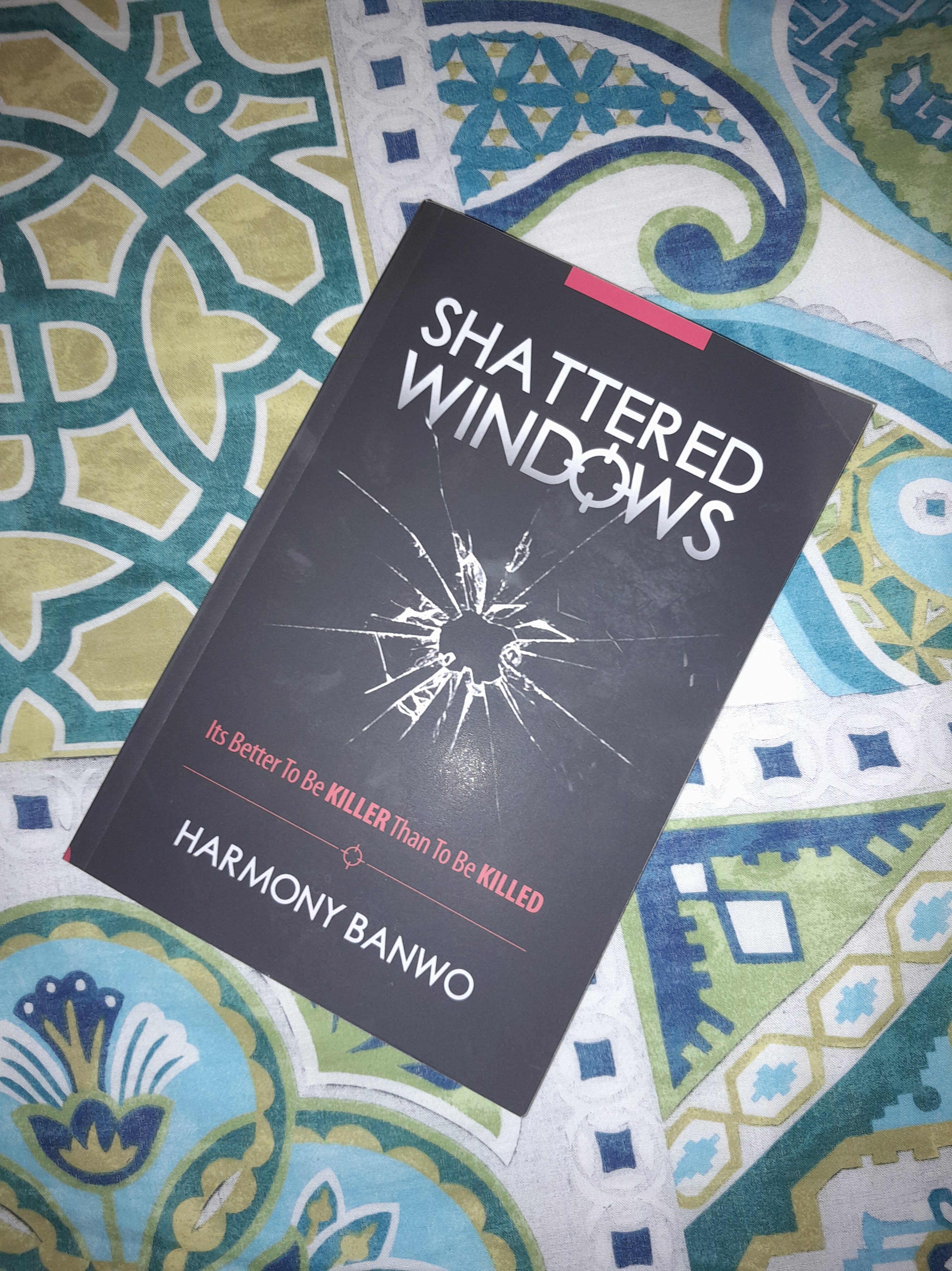
I needed a fresh voice to bring me back to reading and writing again. And it came in the voice of a beautiful young girl Ms. Harmony Banwo. To imagine that this 13year old author could write anything that could intrigue my adult mind was amusing, but soon enough I found myself turning he pages of her novella “Shattered Windows” until there was nothing left to read.

Harmony Banwo.
Author of Shattered Windows

In Shattered Windows, Ms. Banwo takes a walk with her readers on the streets of her main character’s life, a teenage girl called Nevaeh. Nevaeh was the only child of Ms. Hart, a single mother who suffered mental health episodes. In Nevaeh’s world, the sky is not blue. It had different shades of colors. Nevaeh’s 16year old life is scared by the incidence where she witnesses her mentally ill mother grievously harming a man who few seconds earlier was a stranger but is soon known to be her absentee father. Right in her presence, her father is being killed for breaking a deal made over 16years ago, before her birth. Nevaeh is caught between standing by her once adored but now cold-hearted mother or being a life saver to a father who left but now desperately needed her to save him from death.

Unwillingly, she let her mother print bloodstains on her. Watching her mother become her happiest by killing her father, with his blood splattered all over her opened a pandora’s box in Nevaeh’s young life. Not ending up like her father who couldn’t kill and was killed but being like her mother who could kill and lived a troubled life, became the biggest decision she would make.

Hereafter the path to her thoughts becomes strewn with rocks and dirt as she disappears into the darkness painted by her mother, a darkness that hides secrets and poses many questions, for which I had no clear answers to:

“People will say ‘your mom loves you Nevaeh.’ I know she does, but the love she has for me, the way she loves me made me wonder if it was real… Is this what being in love was really like? I never understood what love was growing up. Was love a fuzzy warm feeling, or was love a tragic draining feeling? Was there any answers? Nothing felt right or wrong. How can you be sure you love someone when it comes to reality? Nothing is very happy forever; nothing is ever perfect forever.”

A child should always imagine a life lived on candy land, not in dark places without windows. But for Nevaeh, the candy she knew was the pills her sick mother swallowed to dull her mental pain. The burden that a parent’s mental illnesses places on a child(ren) is brought alive here in the words and thoughts of Nevaeh:

“I realized that without me, she couldn’t get away, she couldn’t stop the pain; I was a different version of painkillers to her. I ate all the pain and suffering she had been feeling… I was her last choice, her last freedom.”

Nevaeh wished for a life where she and her mother both had a chance to live together, one without the memories of the thick black knife covered in her father’s blood, one without flashbacks of dark places with cold black doors, thoughts of suicide and mood swings. Some days her life was in a state of inertia; she didn’t want to die or live, she just wanted to perish into thin molecules. Despite her desire to live differently in spaces where their trauma was no longer alive, helpless Nevaeh leaned to her mother’s wishes by enabling her death and attempting suicide:

“I took a deep breathe, and I pushed my mom off the railing. I saw her body being caught in the air. I thought about it one more time and maybe it was my head spinning from seeing my mom being sent to her death. But I wanted to join her… I saw my mom almost crashing to the ground and I didn’t cry because I was going to join her.”

I could see how this young author does not just highlight the trauma of mental illness suffered by adults, but also puts the dire issue of adolescent mental health which remains poorly explored on the map. Simply put, she is saying that every mind matters. The World Health Organization notes that globally, one in seven 10-19-year-olds experiences a mental disorder, this accounts for 13% of the global burden of disease in this age group. It is further noted that depression, anxiety, and behavioral disorders significantly contributes as a leading cause of illness and disability among adolescents. Furthermore, suicide is marked as the fourth leading cause of death among 15–19-year-olds.

As was the case of Nevaeh’s mother Ms. Hart, where unaddressed, adolescent mental health conditions grow with them to adulthood, impairing their wellbeing and limiting their opportunities to lead fulfilling lives as adults. As part of its promotive and preventive interventions for adolescent mental health, the World Health Organization and UNICEF in a joint effort, had introduced the Helping Adolescents Thrive (HAT) Initiative. Aligning with this was their production of the Helping Adolescents Thrive Toolkit in 2020. The HAT Toolkit presents strategies to promote and protect adolescent mental health globally.

Yet protecting children and adolescent is a duty for us all. Literary works continues to prove an effective medium for promoting mental health issues. In an admirably succinct way, Ms. Banwo’s work shows that when mental illness happens in our homes, pieces of the shattered minds often hit the children. In prioritizing household and community wellbeing, we ought to put our young ones at the Centre, expressing that if our young ones cannot be well and happy, no one should.

Written by~ Adaobi Nkeokelonye

Memoirs of a Geisha

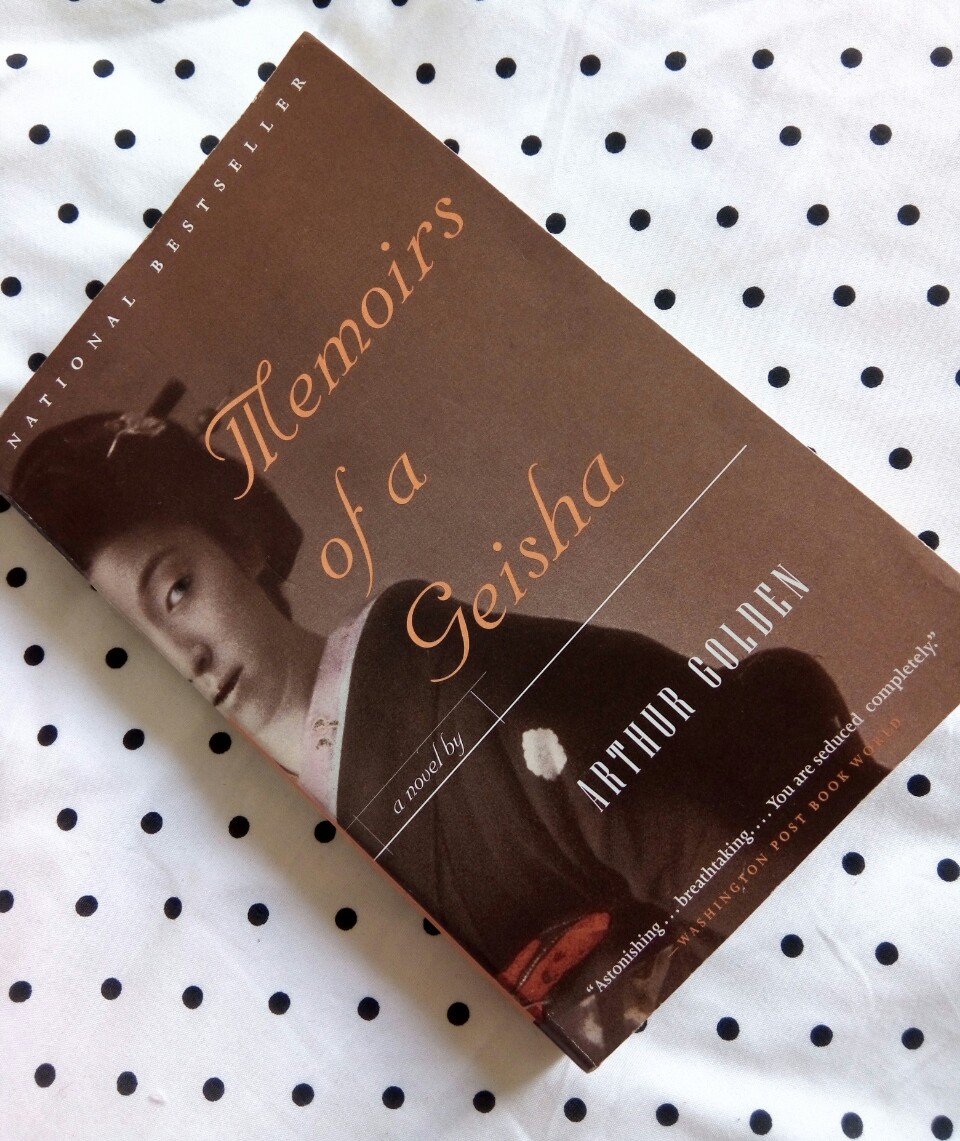
Memoirs of a Geisha shares the journey of how Chiyo-Chan, the young girl from the Seashores of Yoriodo, born in the year of the monkey, with so much water in her personality became Nita Sayuri the renowned Geisha of Gion in Japan. The Fisherman’s daughter from the little dump village of Yoriodo which had no glamorous spot, will as a child, with her father’s consent and Mr. Tanaka’s support, be bundled with her elder sister Satsu, away from their little tipsy home by the cliff, into a new place where they knew no one.

IMG_20171019_101436
Nine years old Chiyo is astonished at her first glimpse of city light, and right under the puddles of yellow glow in the city of Kyoto, she is forcefully separated from Satsu. Unlike her sister, Chiyo’s translucent gray eyes got the fascination of everyone and defined her destiny; Satsu was taken to Miyagawa-cho, a home for prostitutes, while Chiyo ends in the Nitta Okiya, a place where Geishas are nurtured.
An earlier visit to Mr. Tanaka’s home in Senzuru had unknowingly given Chiyo a peep into her future, but little did she know that the beautiful woman in pink kimono with an obi tied around her middle, entertaining men in the teahouse in Senzuru, was nothing compared to the sight of the exquisitely beautiful woman that will welcome her in the Nitta Okiya. Meeting more elegantly dressed women like Mother and Granny, and then a little girl of her age Pumpkin further puzzled Chiyo to seek knowledge on where she found herself.

‘May I ask, ma’am…what is this place?’
‘It’s an Okiya…It’s where Geisha live. If you work very hard, you’ll grow up to be a Geisha yourself.’

In the Nitta Okiya, Chiyo became the most junior of cocoons. She was exposed to store house of Kimonos so expensive they could buy the whole village of Senzuru and Yoriodo where she came from. But such exposure to wealth, beauty and glamour like she had never seen before did not take her heart away from home. Being sent out into the world isn’t necessarily the same as leaving your home behind you. Daily, she thought of her sick and dying mother, of Satsu who she misses, and her father who sold them for money. The hatred of Hatsumomo and everything that made her life more difficult strengthened her determination to run away.
Though at this time, Chiyo had commenced her schooling to become a Geisha with Pumpkin, a brief reunion with Satsu (who now worked as a prostitute) led to their hatching an escape plan. Daily Chiyo planned how she would escape through the roof in the Okiya to reach the Minamiza theatre where Satsu was waiting as planned. A broken arm from her roof fall spoiled it all, Chiyo was brought back to the Okiya and made to understand that her burden of debt just increased.


‘Do you know how much I paid for you?’ Mother said
‘No, ma’am… But you’re going to tell me you paid more than I am worth.’
‘You are right about that!…Half a Yen might have been more than you’re worth….I paid seventy-five yen for you, that’s what I paid. Then you went and ruined a kimono, and stole a brooch, and now you’ve broken your arm, so I’ll be adding medical expenses to your debts as well. Plus you have your meals and lessons, and just this morning I heard from the mistress of the Tatsuyo, over in Miyagawa-cho, that your older sister has run away. The Mistress there still hasn’t paid me what she owes. Now she tells me she’s not going to do it! I’ll add that to your debt as well, but what difference will it make? You already owe me more than you’ll ever repay… I’ll suppose you could repay it after ten or fifteen years as a Geisha,…if you happened to be a success. But who would invest another sen in a girl who runs away?’ Mother said.

‘Throughout my months in Gion, I’d certainly imagined that money must have changed hands before Satsu and I were taken from our home. I often thought of the conversation I’d overhead between Mr. Tanaka and my father, and of what Mrs Fidget had said about Satsu and me being “suitable.” I’d wondered with horror whether Mr. Tanaka had made money by helping to sell us, and how much we had cost. But I’d never imagined that I myself would have to repay it.’


Hence, she wallowed in an overwhelming feeling of despondency. In Aunty’s words,
‘You’ll never be a Geisha now!… I warned you not to make a mistake like this! And now there’s nothing I or anyone else can do to help you.’ 9yrs old Chiyo was hereafter condemned to the drudgery of a maid for trying to run; ‘I was living only half in Gion but the other half of me lived in my dreams of going home.’ A letter from Mr. Tanaka changed her horizon forever.

‘Dear Chiyo,
…Six weeks after you left for your new life in Kyoto, the suffering of your honored mother came to its end, and only a few weeks afterward your honored father departed this world as well…Your sister, Satsu, came through Yoriodo late this past fall, but ran away again at once with the son of Mr. Sugi…’


To learn in a single moment that both her mother and father had died and left her, and her sister too lost to her forever, made her mind feel like a broken vase that would not stand. In the years to come, her life was like a big bee in a jar, circling and circling with nowhere to go. It wasn’t worth it thinking of a sister she lost, a mother whom she hoped was at peace in paradise and a father who’d been so willing to sell them and live out the end of his life alone. Chiyo had no choice but to begin negotiating her past and future.

‘The stale air had washed away, the past was gone. My mother and father were dead and I could do nothing to change it. But I suppose that for the past year, I’d been dead in a way too. And my Sister… yes, she was gone; but I wasn’t gone. I’m not sure this will make sense to you, but I felt as though I’d turned to look in a different direction, so that I no longer faced backward toward the past, but forward toward the future. And now the question confronting me was this: What would that future be?’


The gods will smile on her and she experienced the kindness of strangers like the Chairman, Nobu and Mameha, with the chairman playing a small-god designing the architecture of the rest of her life. Under Mameha’s nurturing, she resumed her lessons as an apprentice Geisha, learning that though some where born into the lineage of Geisha, others were forced into it:

‘We don’t become geisha so our lives will be satisfying. We become geisha because we have no other choice.’


Dance is the most revered of a Geisha’s art, Chiyo mastered it along with the tea ceremony, flower arrangement. She learnt to always look pretty and alert, to wear the Okobo as though it was her feet’s glove, mastered the shamisen and regalia of the apprentice geisha until it was no longer cumbersome, and elegantly displayed the momoware. On the day of her debut ceremony, like a caterpillar turns to a butterfly, little Chiyo died and a beautiful Geisha named Sayuri was born. As the seasons changed, she ruled over Hatsumomo as she became the adopted daughter of the Nitta Okiya. Sayuri Nitta became one of the twenty greatest Geisha of Gion’s past, for almost three decades, she mizuage set an unbeaten record in Gion.

While Sayuri’s story had somewhat of a happy ending as she remained drowned in beauty, but that is not the case for other Geisha’s like Hatsumomo. Unlucky Geisha’s end up as prostitutes or drink themselves to death. Such is a reality that makes being a Geisha not sustainable and more so continues to raise the question on whether beyond class and artistic skill, if there really is much moral difference between the Geisha that ties her Obi to the back and the prostitute that ties her Obi to the front? The two have a lot on in common; they become geisha or prostitute because they mostly lack choice, they become play things of men in power, their success and survival is dependent on their ability to entertain men and get paid or kept for it.

Looming over this fiction novel was the mood of the Nation during the Allied Occupation in Japan. Sayuri sprinkled stories of the second war until the impact of the war hit Gion and resulted in the closure of all Tea houses, rendering both the Geisha’s and Prostitutes to a life of helplessness. Kuraitani as they called the years of the great depression was a valley of darkness, a decade of crushed hopes. Through her narratives, we feel what happens to citizens when a country goes to war. War was indeed a leveler, it turned some Geishas to prostitutes and factory workers. It turned appliance manufacturers into builders of fighter airplanes, and more so Kimono makers into parachute makers. Left with Ghostly memories of Gion, Sayuri survived making parachutes. The reopening of Tea houses at the end of the war was marked with symbolisms; shoes of American Soldiers had replaced the usual rows of men’s shoes which the Geisha’s were used to. And once again the Geisha’s took their place as a National Treasure.

 
Authur Golden’s novel Memoirs of a Geisha hit so many notes on themes relevant to the International development sector. First is the narrative of Gender, projected by Income Inequality which reinforces the culture of Geisha. There was not a single story in this book about any woman who saved herself, or lived independent of men’s mercy. The theme of Poverty provoked by the war and more by the rural/urban dichotomy is noted. Next is the concept of Vulnerability expressed by the Geisha’s and in the character of Satsu and Chiyo, whom as vulnerable children were sold into a life of slavery. This singular act of selling the two sisters for cash by their father understood as Child-trafficking, and Satsu’s purchase by Sex Traffickers, likewise Chiyo’s purchase as a maid and then a Geisha who is enslaved to generate income for the Okiya, remains a foundation of core problems which many development institutions are positioned to solve. Reports on Trafficking in Persons show an increase over the years, specifically, trafficking women and children for sexual exploitation is the fastest growing criminal enterprise in the world.  2017 Estimates referenced to the International Labor Organization, 24.9 million victims are trapped in modern-day slavery and 4.8 million (19%) people  are trapped in forced sexual exploitation globally.

In appreciating Arthur Golden’s contributions to relevant development discourse, I could not help imagining the many Chiyo’s and Satsu’s in different parts of the world, who continue to dream of freedom, on how they wish daily that time runs backward while dealing with the difficulty of running away. To these ones, I wish the kindness of strangers, and the experience of knowing that something besides cruelty can be found in this world. May the next turn of life’s wheel bring to them freedom.
~Adaobi Nkeokelonye

Black Boy!

Every time I read Richard Wright’s ‘Black Boy’, I wished it was fiction; fiction because ‘Black Boy’ is not a pretty book. This reality told from the eye of a teenage black boy was too disturbing to grasp as real. Perhaps this makes it a very important book especially for us to reflect back on how far we have come with the politics of colour  smearing the wind-shield of our lives, one generation to the other.

richard wright

Pics from http://www.haroldshull.com/id19.html

Recently, I have tried to map below in the language of the writer, scenes, incidence and thoughts that chiselled Richard Wright from being a victim of racism to being a racist himself. I now wonder; if Richard Wright were to do the book ‘Black Boy’ today, would the fabric of his story be much different?

 At last we were at the railroad station with our bags, waiting for the train that would  take us to Arkansas; and for the first time I noticed there  were two lines of people at the ticket window, a “white” line and a “black” line.  During my visit at Granny’s, a sense of the two races had been born in me with a sharp concreteness that would never die until I died. When I boarded the train, I was aware that we Negroes were in one part of the train and the whites were in another…  

I had begun to notice that my mother became irritated when I questioned her about whites and blacks and I could not understand it. I wanted to understand these two sets of people who lived side by side and never touched it seems, except in violence. When my mother told me that the “white” man was not the father of the “black” boy, was no kin to him at all, I was puzzled. “Then why did the ‘white’ man whip the ‘black’ boy I asked mother…

Uncle Hoskins had simply been plucked from our midst and we , figuratively had fallen on our faces to avoid looking into that white-hot face of terror that we knew loomed somewhere above us…Uncle Hoskins had been killed by whites who had long coveted his flourishing liquor business… A dread of white people now came to live permanently in my feelings and imagination. Nothing challenged the totality of personality so much as this pressure of hate and threat that stemmed from the invisible whites…I had never in my life been abused by whites, but I had already become as conditioned to their existence as though I had been the victim of a thousand lynching…

One evening, I heard a tale that rendered me sleepless for nights. It was of a Negro woman whose husband had been seized and killed by a mob. It was claimed that the woman vowed she would avenge her husband’s death and she took a shot gun, wrapped it in a sheet, and went humbly to the whites, pleading that she was granted permission to come to the side of her dead husband while the whites, silent and armed looked on. The woman, so went the story, knelt and prayed, then proceeded to unwrap the sheet; and before the white men realised what was happening, she had taken the gun from the sheet and had slain four of them, shooting at them from her knees….

Black boy

Pics from http://app.studysync.com/RichardWright

I had already grown to feel that there existed men against whom I was powerless, men who could violate my life at will. I resolved that I would emulate the black woman if I were faced with a white mob; I would conceal a weapon, pretend that I had been crushed by the wrong done to one of my loved ones; then, just when they thought I had accepted their cruelty as law over my life, I would let go with my gun and kill as many of them as possible before they killed me. The story of the woman’s deception gave form and meaning to confused defensive feelings that had long been sleeping in me.

‘Why are they so many black men wearing stripes?’…

“Man, what makes white folks so mean?”

“Whenever I see one I spit.” Emotional Rejection of whites.

“Man, ain’t they ugly?” Increased emotional rejection.

“Man, you ever get right close to a white man; close enough to smell ‘im?”… “They say we stink. But my Ma says white folks smell like dead folks.” Wishing the enemy was dead.

“Niggers smell of sweat. But white folks smell all the time.” The enemy is an animal to be killed on sight.

‘Whenever I thought of the essential bleakness of black life in America, I knew that Negroes had never been allowed to catch the full spirit of Western civilisation, that they lived somehow in it but not of it.’

‘The white boys and the black boys, began to play our traditional racial roles as though we had been born to them, as though it was in our blood, as though they were guided by instinct. … The roundhouse was the racial boundary of the neighbourhood… whenever we caught a white boy on our side we stoned him; if we strayed to their side, they stoned us. Our battles were really bloody …All the frightful descriptions we had heard about each other, all the violent expressions of hate and hostility that had seeped into us from our surroundings, came now to the  surface to guide our actions.

Flipping the pages of this harrowing bildungsroman of Richard Wright written in 1945, am checking the similarities and differences between his time and now. In the quickening events of civil unrest in Ferguson, in the unnecessary killing of young black boys, I can’t help but  observe that the similarities of most black boys in America of today are more numerous , more real and more important than any difference there is with this author’s time.  I suppose if Richard were to write today, he will also ask, ‘why was 17yrs old Trayvon Martin shot, why did Michael brown the 18yrs old boy deserve six bullets’?

In the end, racism is not natural; it begins with the social injection of systemic hatred.  As this emotional and intellectually crippling racial war continues to bloom, we must remember that we all, whether white or black, will be casualties.


Written by ~ Adaobi Nkeokelonye

Do They Hear When You Cry?

Oasis Academy Hadley #FightforYashika Campaign

Oasis Academy Hadley #FightforYashika Campaign

For many social causes that make headlines these days, there is an individual at the center to humanize it. In most cases they enjoy the support of  their community. Yashika Bageerathi, became a ‘star pupil’, making headlines in the past weeks, thanks to her community and fellow students at the Oasis Academy Hadley, United Kingdom. The ‘Fight for Yashika’ campaign gathered thousands of votes on Change.org  to ensure that Yashika, a 19yrs old Mauritian student who came to the United Kingdom as a refuge, was not deported to Mauritius without the chance to complete her A-levels. They pleaded that she should not be torn away from her family and be given a lonely deportation to Mauritius where she had no family or friend to rely on.

Yashika Bageerathi

Yashika Bageerathi

All of that fell on the deaf ears of the UK Home Office whom do not mix business with sentiments. Despite the knowledge that Yashika is a model student,a valuable member of the Einfield Community, and on the good side of the migrant books, she was deported.  Yashika’s case does not stand out. Lorin Sulaiman, the Kurdish school girl, whom with her family fled persecution in Syria and claimed asylum in the United Kingdom, faced similar circumstances. Again the school community came to her aid with a huge ‘Free Lorin campaign’. Unlike Lorin, Yashika was eventually deported, plucked away from family and friends to Mauritius by a system that has shown it knows no compassion. She sought for so little; a chance to complete her exams before she was disproportionately deported against Article 8 of the Human Rights Act (respect for private and family life). But all effort did not go down the drain, thanks to the 178,000 votes gathered, the jammed lines and media platforms of MPs, Home Office, Air Mauritius and Heathrow Airport. Being at the center of media broadcast, this case helped to refocus attention on the horror of Yarl’s Wood detention centre where Yashika like other refugees and deportees are kept on arrival and prior to deportation. This structure projects the lack of compassion in deportation systems around the world.

Refugees who seek asylum are stereotyped as scroungers who lie to get into privileged systems. Not much can dismantle this stereotype which has filled the knowledge void of the average person whom knows nothing of a refugee experience. What happens in Yarl’s Wood and other detention centers no longer remains within. Yarl’s Wood Immigration removal center has made negative headlines with stories of death, torture, hunger strike, sexual abuse among other forms of injustice experienced by refugees.51ZDNH9WJNL

Seeking to capture this in fiction novels has been a little challenging. But my friend Mary Okeke reminds me of Mark Twain’s quote ‘The truth is stranger than fiction …Fiction is obliged to stick to possibilities; Truth isn’t ’. The truth of the horror of detention experience was painfully captured in the novel ‘Do they hear when you cry?’ With an emotionally provoking title, Layli Miller Bashir helps the author Fauziya Kassindja, narrate her experience as a refugee. This rare piece of work coming from Fauziya emerges from Togo where literary works are sparse in comparison to their neighboring countries. Fauziya is born into a middle class Muslim family in Togo, to a society where polygamy, teen marriage, genital mutilation among other practices are normalized. With the death of her father, she is married by a polygamist who requires that she be mutilated to qualify as his wife. With the help of her sister, Fauziya escapes to America via Ghana and Germany.

This non-fiction novel, gives us a first-hand account and a lens to view the experiences of refugees especially from developing countries. The irony of the refugee experience is well captured here; they leave the tortured spaces in search of their romanticized land of freedom in Europe, but the sanctuary they hope for welcomes them with the incarceration and persecution they run from. Fauziya was mortified, stripped naked, forced to bath in the open, given bad food and isolated in prisoner style by our dear America. Her failing health and dying hope was restored by Karen Musalo and the law student Layli Miller Bashir, together with Washington College of Law who helped gain her an asylum status.

Not many are as lucky as Fauziya to have been freed. More refugees are still being held at different detention center around Europe where they are treated as criminals which is against their human right. While the British Government expresses its promise to remove those who have no legal right to remain in the UK,  a complex debate on the rights of refugees and Asylum seekers continue. The 1951 Geneva Refugee convention relates to the Status of Refugees (CRSR). This United Nations multilateral treaty defines the status and rights of a refugee, and setting out rights of individuals granted asylum and the responsibilities of their host nations. For a convention that was approved in 1951 and entered into force in 1954, it has not done much to protect the right of refugees even in ratifying nations.

Over the years, organisations like Women for Refugee Women, individuals like Fauziya, Melten Avcil, Yashika, and others have achieved more in highlighting the unjust treatment of refugees and asylum seekers. Fauziya Kassindja’s case provoked the acknowledgement that victims of Female Genital Mutilation are worthy of Asylum in the USA. Melten Avcil (who at 13yrs was locked up Yarl’s Wood in 2007 with her mother and later released) is currently championing a campaign, petitioning Theresa May, British Home Secretary to end the detention of women who seek asylum in the UK. We can support this worthy cause by signing and making up the 50,000 signatures needed by Melten Avcil’s petition here change.org

What I am doing, is not to obscure the wider issues and challenges of migration control. I do understand the need for nations especially in the developed country to put further curbs on immigration for obvious reasons. The idea of this article is not to justify illegal migration or to ask that humane asylum policy should be led by emotions and not law, no! I believe that despite the challenges, we can still preserve the rights of persons who are fleeing persecution as stated in the 1951 Geneva Convention.

Men,Children and Women in particular who flee death, torture, rape and imprisonment do not deserve to be incarcerated if their do they hear you when you cryonly crime is fleeing persecution in their home land. They do not deserve to be welcomed by the very devil they fled from in sanctuary Europe, or to be forcibly returned to the country they flee from.  In the word of Melten Avcil ‘If a woman has already experienced rape, torture, and imprisonment in her home country then it is really hard for her to be locked up here’.

Yarl’s wood and other detention center across Europe and America are no refuge for refugees. Sadly,they still have hundreds of asylum seekers locked up in them. Dear leaders, do you hear when they cry?


Written By~Adaobi Nkeokelonye

Is Sizwe Bansi Dead?

When a piece of writing gets you a space in jail, then it struck a very sensitive cord for the incumbent government. The texture of such writing, are absurd, dealing with surreal subject matters.  Sizwe Bansi is Dead is such; a dramatically provocative piece with strands of humor and layers of irony. It excites the good and the bad. Despite not mentioning the word ‘Apartheid’ in all of the book, it triggered the then South African Apartheid Government to arrest Athol  Fugard and his African co-writer/performers John sizwe banzi is deadKani and Winston Ntshona for treason. Talk about a piece of fiction that has aged gracefully, this is it!

Written in 1972, it is set in a South Africa when blacks could only find peace in their grave. With a sparse setting, we meet three major characters, Styles the photographer and narrator, Sizwe Bansi whose experience the drama is centered on and his friend Buntu. Styles established his ‘strong room of dreams’, a photo studio representing an escapist world which presents a space for other blacks to interpret their dream. Behind his lens, they share their dreams, aspirations and achievements. With a click of his camera, he immortalizes them. When finally they are dead and buried like his father, their photo is their only memorabilia. This profession gave Styles fulfillment away from his former job with ‘Ford Motors’ where he was only a ‘circus monkey’ that would be rewarded with just a gold wristwatch after 25yrs of service. With little choice, Styles locates his dream studio next to a funeral parlor, he wages war against some symbolic cockroaches; social venom without which he could not function.

Photo: www.theatreroyal.com enactment of Sizwe Bansi is Dead

Photo: www.theatreroyal.com enactment of Sizwe Bansi is Dead

Sizwe is Styles client with a dream to get employment in Port Elizabeth, away from his home in King Williams Town where he could not provide for his wife and kids. But with a passbook that declares it illegal for him to reside or gain employment in Port Elizabeth, Sizwe is boxed! This scene captures the realities of migrants seeking greener pastures outside their home zone and abroad.  Unlike most illegal migrants of today who have relative freedom to move around and live in most countries, Sizwe could not. Sizwe’s movement was strongly regulated by the apartheid system in place.His passbook (Visa) required him to return to King Williams Town in three days. Like Buntu his friend, Sizwe is battered but still hopeful.

This drama, projects for me, the extreme sacrifices many migrants and perhaps desperate job seekers make to survive in a strange land. Sizwe saw himself as a ghost; after all he lived in a strange land where he was irrelevant and unnoticed. More so, not being able to earn income to sustain his household meant he was not a man but a dead man. With the help of Buntu,  Sizwe finally puts his self to death.  He gave his life and body to a dead man’s name, incarnating his self into Robert Zwelinzima, (the dead man) whom Buntu performs a surgery on his passbook which still holds a job seeker’s permit. Buntu replaced Robert’s picture with Sizwe’s. Sizwe Bansi is dead, Robert Zwelinzima is alive!

Sizwe Banzi Is Dead Photograph: Robert Day from theguardian.com

Sizwe Banzi Is Dead Photograph: Robert Day from theguardian.com

Sizwe (now Robert) with a new job, wearing a new suit, Stetson hat, a pipe in one hand and cigar in the other, is transformed to who he wants to be. Styles escapist world is the best place to capture the birth of the new Sizwe for his wife and family in King William Town to see. The whole play is climaxed in this scene where Sizwe struggles with constructing his new identity. This has supported the projection of the theme of this novel as that of Identity struggle.

While identity as a theme is obvious, it should not overshadow the significance this drama gives to the reality of migrants especially in the world today. It frames the struggle for identity, projecting the realities of shifts necessary for a migrant’s survival.  It fits within the development context of migration and human right discourses, detailing the negotiations of national identities and other struggles migrants experience in the search for livelihood in a foreign land.

Migrants don’t arrive alone; they bring with them their culture, values and perspectives to life. In some cases, they don’t leave their homes willingly, they are forced to migrate. In the struggle for survival, most migrant job seekers have to live with an uneasy switch to dualism, impersonating other people’s privileges; this for them is worth it if they can survive. Diffusion into a new society is difficult, both for the migrant and their host society. Governments and people struggle to give space to migrants. In this process, many migrants are displaced, left at the margin of their new society. Some are made to feel they are just invisible, and just don’t count.

Wajiha Hamid (Third from left) with some Migrant Workers in Singapore.

Wajihah Hamid (Third from left) with some Migrant Workers in Singapore.

The way individuals and communities respond to the challenges of immigration and settlement is a trendy issue in International development. This has been expressed by the United Nation’s Convention on the Protection of the Rights of All Migrant Workers. Adopted in 1990, it entered into force in 2003.Though in place, it has only been ratified by just forty states, exclusive of major immigration country.

Taking a leaf from the knowledge on the plight of migrant workers in countries across the world, the vizualmusing blogger; my dearest friend Wajihah Hamid with the support of her Sister Aisha organized Project Parallel Paths. They brought together 18 injured migrants workers and 13 natives of Singapore for an excursion to some places of interest in Singapore. The migrant workers were given Cameras to take individual photographs within a theme that captures their perspective of their host community.

Participants discussing their photos after Project Parallel Walk.

Participants discussing their photos after Project Parallel Paths.

The outputs are amazing and insightful pictures of Singapore in the eye of a migrant. Most importantly, it created a space for injured migrant workers to relax, eat out, visit the beach and mix freely with the natives. This ingenious project inspired by Waji’s experiences of her dissertation which included participatory action research method for once exalted neglected migrant workers from being research guinea pigs to active participants in research processes.Relating her key lesson from this initiative to me, Waji said ‘I have learnt that people sometimes overlook each other, and that given an opportunity, they can stop, re-think and make an effort to acknowledge the presence of ‘the others’ within their society’.

I appreciate Wajihah, Athol Fugard, and his African co-writer/performers John Kani and Winston Ntshona, and many others who are creatively helping migrants to live and make a living in a foreign land. The Sizwe Bansi of our time doesn’t have to die if more concerned people will address the plight of migrant workers world over.

Singapore

A collage of some activity pictures from Project Parallel Paths

– Written by Adaobi Nkeokelonye


Writing Violence…

While working on a short story on domestic violence recently, I was privileged to get a colleague review it. ‘It lacks suspense, noCapture action, not gripping, it fell flat like a biography’, this was his response. To bring it alive, he suggested we add some action. This he did, by injecting some dose of violence, a scene with a strong narration of one violating one’s kind. Amazingly, the story came alive with suspense! It took the ambiance of most familiar fiction novels I know.

I am still amazed at the ease with which violent writing came to my colleague, unlike it came to me. I have tried to look at this event with a gender lens; are male writers better at writing on violence than women writers? This is a huge argument, but gendering this, is not the focus of this article.

At the soul of this piece is the need to explore how writers of literary fiction have engaged with the theme of violence in their work.  Do they write to excite, inspire or discourage violence, or do they just flirt with violence for the purpose of adding shock to their work?

No work of fiction is written in a vacuum. All of them cling to issues that are of relevance to the society. Violence is trending in almost every society these days, governments no longer hold monopoly to violence, in all forms of unruly politics, citizens now exercise rights to different types of violence. You may call it terrorism, war, sexual or physical abuse, mutilation, child abuse or anything else. All of these names rest on violence; the act of violating one’s kind. The reality of this in our society cannot be ignored. From the city streets to the country sides, within our homes and in our daily lives, like air, violence is speedily and easily penetrating our life.

The rising number of war, the growing incidence of terrorism especially among developing countries, introduced a very high note in the rhythm of global violence. Like most violent acts, terrorism uses force to attain political end. What makes it incomprehensible is that the victims often have no relations or affiliation to the political issues they fight. Perpetrators of this type of violence, show a profound disconnection that amounts to hatred of one’s kind, a disregard for life and all it represents. This facts make me wonder if such disconnection and disregard are experienced by writers and their readers when conjuring, narrating or engaging violence in novels? I am still unable to comprehend violence, I cannot effectively narrate it fictionally, and hence I cannot answer to these experiences.

While the above questions represent questions of process, the questions on intent are also important. What is a writer’s intention for projecting violence? It seems to me that some writers use violence in their narratives to compel action in our society. For example, the generation of Apartheid writers in South Africa would use violent narratives to reflect the evil of the existing apartheid system and incite people against racism and injustice. Other writers may need to inject violence to gain a balanced reflection of a true society, considering that violence is understood to be organic. A later group of writers may use violence because it sells; it shocks or can indeed be entertaining.

american_psychoCormac McCarthy’s ‘Blood Meridian’, ‘American Psycho’ by Bret Easton Ellis among others are example of fiction novels reeling in violent narratives that should disturb even the coldest hearts. While they are highly rated, I may highly underrate such dark writing for exciting violence.10876214          This category of literature, often termed ‘Transgressive Fiction’ or ‘disturbing Novels’ are characterized with presenting protagonists who thrill with terror and taboo, with all willingness to portray forbidden behaviors or shock readers. Like the terrorist of the real world, they are emotionally disconnected. Their striking detachment from life enables them to dice, slice and saw their fellow humans. Novels in this genre have been subject to many obscenity trial, but are often permitted.

Novels do not just entertain, they impact. Engaging with such blood-drenched books with routine killing of women, children and everything alive, I often ask, how are they helping shape the society, how are they contributing to helping people change their mental paradigms on violence, towards the peace and well-being our world so desperately needs? This may be defended as another genre of literature, yes a ‘disturbing genre’ with huge fan base to whom such violence is comprehensible and perhaps entertaining. But are there no better way of creating these types of work without indecorously portraying violence in all its stark nakedness?Alice Walker

It’s an understanding that violence is organic in our society, I am not sure if such violence can be extinct in fiction writing but I am sure we can change the stories around it to ensure we do not glamorize violence. Writers have a responsibility to reflect in their work, the world as we want to see it. I agree with Gail Larsen that ‘if you want to change the world, tell a better story’. I still believe that it is possible to live an inviolate life. Perhaps, we can indeed start with how we project violence in writing.


– Written by Adaobi Nkeokelonye

Africa’s Third Liberation

It’s midnight Saturday 15th of March 2014, some families stayed awake with grief stricken faces. Close to twenty of their young graduates who left them that morning for the National Immigration Service recruitment examination had not returned home. They will never return home, they were gone; dead in the stampede, trampled to death by over six million  fellow Job seekers vying  for four thousand opening in Nigeria’s immigration service. There is no better indication to confirm that a third liberation is becoming long overdue for most African country.

IMG_4665Greg Mills and Jeffrey Herbst’s ‘Africa’s Third Liberation’ has been by my bed side in the past week. Coincidentally, I have read this book alongside ‘the Incorruptible Judge’ by D. Olu Olagoke which I reviewed here. Representing different genres of literature and published in different era, I had no challenge finding their linkages. This two books are my best bet at conceptualizing linkages between unemployment and corruption as projected in Africa and perhaps world over.

As children, we took pride in acting good plays. We were our own cast, our own stage and costume managers and producer. Our stage was the pure red earth beneath Africa’s moonlight. Yes, for us it was not just the sun that rises, the moon sets and rises too, giving light to our immature performances.  The Incorruptible Judge was a favorite play with its good story line. It taught us the the words ‘bribery’, ‘corruption’ and ‘unemployment’. Of the three, unemployment  was a word we didn’t clearly understand until we grew into graduates and job seekers. Perhaps the incidences mentioned above now gives more meaning to unemployment.

Written in 1962, almost three decades before we encountered it,  D. Olu Olagoke presents a story that different generation can relate to. As captured in the review, ‘ The Incorruptible Judge and the Incorrigible Liar’, it tells of a time when in the face of crime, whistle blowers like Ajala the job seeker were commended and given justice by the legal system. It was a time when the values of the society reflected in the education we received and the expectations we had, there was in practice, no conflict. Our understanding of good and bad was in no way blurred. Consequently we knew bribery was bad and that it only births corruption. Apart from warning on the evil of bribery and corruption, D. Olu Olagoke with his play might have tried to excite our imaginations and prepare us for a season of joblessness.

‘Africa’s Third Liberation’ reflects back on the journey of African countries from about seven decades ago, to 2011. Seven decades

African Independence Map by www.geocurrent.info

African Independence Map by www.geocurrent.info

ago to the present time creates a wide space for reflections and deductions. Though Olu Adegoke writes at almost  the same time, Greg and Jeffrey did a more extended and indepth work. They conceptualized the sub-Saharan African Journey of liberation in this era (1960’s and above) into three. Africa’s first liberation meant freedom from the colonist’s racial government. The second one was (or still is) freedom from Africa’s liberators. The long overdue third liberation addressed in this book focuses on Africa’s economic growth through reassessing their present political economy characterized by corruption, capitalism, elitism and social inequality.

If D.Olu Adegoke envisaged a failed state weakened by corruption then, he is prophetically correct. Greg Mills and Jeffrey Herbst’s reflection on sub-Saharan Africa’s development experiences and their reality today, projects a continent with rich resources littered within the boundaries of its fragile states. The widespread unemployment, a veneer of justice, pervasive impunity all climaxes in weak leadership which is a continental malady. Relatively, while the Incorruptible Judge espouses glimpse into the future where power is abused and public trust is betrayed by leaders using public power for private gain, ‘Africa’s Third Liberation’ gives a roadmap out of it.

A cross section of applicants at the NIS recruitment test in Abuja,Nigeria

A cross section of applicants at the NIS recruitment test in Abuja,Nigeria

Sharing a strong theme of pervasive unemployment as seen in the experiences of Ajala the young school leaver in ‘The Incorruptible Judge’, Greg Mills and Jeffrey Herbst likewise expressed that for all Africa’s progress, jobs for young people remains an extra-ordinary challenge especially for sub-Saharan Africa where formal sector employment is endemically low and falling. The demographic dividends of yesterday’s children being todays’ workers are being lost with all its exciting development opportunities. This lack of jobs for young people fosters slow growth of Africa’s middle class. This is imperative for any country’s development.

Corruption, which is the common thread that runs through the poor development of the continent, cannot be ignored as responsible for endemic unemployment. While Justice Faderin sought to deter this in the fictional society he represented, Greg Mills and Jeffrey Herbst projects it better in Malawi, an African country which remains one of the world’s poorest. It can’t be exclusively said that corruption is solely responsible for this level of poverty, but it also cannot be excused as reason why three-quarters of their population lives below US$1 a day. Greg and Jeffrey explored the trajectories of Malawi presidents from the time of late President Hastings Banda (who declared his self, president for life ruling from 1964 to 1994) to the time of President Bakili Muluzi, through to the time of President Bingu wa Mutharika.

Picture on Farm Input Subsidy Program (FISP) by malawidemocrat.com

Picture on Farm Input Subsidy Program (FISP) by malawidemocrat.com

The clear difference in their tenure was notably the nature of venality, escalating corruption from being very centralised, to being widespread, open and consequently, more sophisticated with a carefully developed chain. Everything trickles down, whether good or bad. This is the case with the Malawi government’s Farm Input Subsidy Program (FISP). This reform helped build food sufficiency and improve lives for a while in an internationally acknowledged way; but it also gave scope and further created a ring for massive corruption among bottom ladder farmers on-selling the fertilizers and the elites managing the corrupt processes. Hence Malawi lost more years of growth to venality.

Despite the author’s comparison of sub-Saharan Africa to Central America’s country like Guatamela (the murder city of the world) where corruption is the way of life, African countries have in different ways proven they can grow. Holding 60% of the world’s most arable land and other resources, yes Africa can upswing their destiny away from poverty and endemic unemployment.

As the authors project, venal Malawi, poster boy Nigeria, war-land Congo among other countries alike, need to exercise the will to challenge vested interested which is the root of corruption. Otherwise the states will remain weak, festered with social inequality and infested with joblessness which may trigger radicalization of politics and criminality. We are reminded that citizens empowered by technology and power are no longer tolerant like before as can be seen in the Arab spring.

The authors of Africa’s Third Liberation recommends a clear departure from the trend of leadership conflicting with interest and encourages African leaders to take full responsibility for their country’s economic destiny, as steps for upswing economic growth. However my addition will be an essential factor which they and most of us seem to ignore.

Lexis Nexis Project Rule of Law Banner.

Lexis Nexis Project Rule of Law Banner.

In my understanding, fragile states have undermined laws, indeed the quickest way to weaken a state is to weaken the legal system and make its constitutions a paper tiger. Hence, strengthening the legal system remains a strong indicator for progressive growth in this region. Legal systems are important for institutionalizing and securing reforms that can create jobs and promote any proposed development models. A strong legal system encourages rule of law, providing mechanisms for accountability, transparency and political stability. This creates space for implementing forward-leaning policies and most of all good leadership. As Justice Faderin, the incorruptible judge puts it, ‘if the citadel of justice is corrupt, what will happen to the body politics? It will be completely rotten and collapse’.

There is a linkage between graft and unemployment as they are interconnected. Reducing unemployment or corruption is FFT159_1simpossible without a refashioned process of law that enables a fair and functional state. Imposition of the rule of law will be the bedrock of development in African states; it will ensure supremacy of the law over all citizens, no matter how powerful they are. Africa needs the return of the incorruptible judges to strengthen the law and create a corruption free state, perhaps this will clearly differentiate Africa’s second liberation from the proposed third liberation.

– Written by Adaobi Nkeokelonye.
 

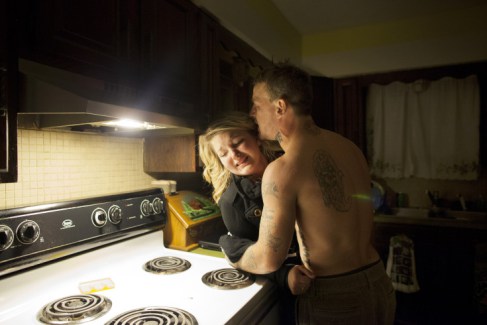
Am I colour-blind or is it a grey street?

Today, Billions of People are participating in the One Billion Rising Campaign. ‘One Billion Rising’ is a global campaign to end to violence against women, rise for justice and promote gender equality. RISE, RELEASE, and DANCE to demand justice and end impunity! Rebloging this post which I contributed in, I am showing support to end violence against women and girls worldwide.

Who is an African?

We become a ghost when we have no identity, this is true. But choosing our identity can mean sitting on the horns of a dilemma where we struggle to fit into many social boxes that just don’t fit our lives perfectly.

DSCF1762Ama Ata Aidoo’s ‘The Dilemma of a Ghost’ is a meticulous and thought-provoking rendition of the struggles we face choosing an identity. From cover to content, her ingenuous creative prowess presents to us the conflicts of identities in the main characters of Eulalie Yawson and Ato Yawson. Eulalie is the African-American wife of Ato who by reason of marriage returns to the Africa she identifies with. But she is regarded by her Ghanaian in-laws as a “black white woman” hailing from no identifiable tribe and a descendant of slaves. She is happy to be in Africa- her roots, but she is not welcomed.  Ato, is the prodigal son, who returns from the United States to13582292 his home in Africa to begin a new life with a new bride. He is caught in the struggle of marrying his American ideals to Africa’s realities. This presents a potential conflict as the experiences of these two categories have less in common. Thus, he is alienated from his family and his heritage and also from his wife; westernized Eulalie cannot understand Ato’s loyalty to his tribe and people, Ato Watson is caught at the crossroad of negotiating his true identity.

The focus of the drama ‘The Dilemma of a Ghost’ captures the trans-generational differences in the viewpoints of African Americans and those who are native Africans. But it indirectly raises issues of diminishing boundary lines in defining people’s identities. The Dilemma of a Ghost essentially creates a space for us to negotiate our identities in an era with many identity clashes where the boundary lines are getting blurry.

Who is an African? This is thought provoking as territoriality or links to African ancestry, limitedly defines an African. Does a conscious commitment to the cause of Africa legitimize one’s claim on the African identity?  Is an African just a dark skinned man or woman? Of course it is simply not a racial category. Pondering on this question makes one realise just how fluid the African Identity, just like other identities have become.

IMG_20130330_002028

Picture from Vakwetu Styles

Reflecting on this topic, I remembered a time when colour mattered. It was in the twilight of the summer term, autumn was drawing near, and there was sunshine and a nip of coolness in the air. I felt rejuvenated as I walked into the library, clad in my dress made of brightly coloured African prints. In that dress and with my kinky hair, I felt different from everyone else. I did not blend with my environment but I had no inferiority complex. I needed my looks to bang the drum about my root, my country, my continent Africa and the culture regardless of whether or not it conflicted with the ideals of England, a country where I live. Yes I am a young African woman schooling in the English man’s country, but I will not miss a moment of flaunting my African Identity.

Walking past the many looming shelves that divided the Library into sections, he was sitting there. He was reading but not in a fixated way. I thought I could walk past unnoticed, but he saw me walking closer and we had to greet again. His name is John Harris. Though we belonged to the same institute, he was not my friend. Subconsciously, I had for unknown reasons kept away from this six foot tall man. He had the Caucasian skin colour with a very youthful body tending towards that of an athlete. By observation, John was not one to be put down when he needed to make a point; he was charismatic and knew very well how to stand in his power. I was used to him addressing me in an endearing way, again he whispered, ‘Hi Sweetheart!’ I responded with some feeling of endearment, asking how far he had gone with his dissertation.

‘I have just started’ he responded.  I couldn’t help giving a hoot of laughter; a distraction for the library environment and the whispery tone of our conversation, so I stopped. We were one month away from submitting the dissertation which had loomed over every graduating student’s life since the last two months. Perhaps he had gone on a long fun holiday and just resumed, I Africa_Flag_Map_by_lg_studio-285x300thought. ‘Where are you from John?’ I asked. ‘I am African’ he said.

His response left a waft of sour taste in my mouth. Perhaps I expected to hear he was from Europe, I wanted him to pick another identity, yes, anywhere else but not Africa, not my continent. His tongue didn’t speak English in the African way. His skin was not dark, it was not close to brown, and he was neither Mullato. He had the privileged Caucasian skin. His claim on the African identity suddenly made me struggle with mine momentarily.

What was it in Africa he laid claim to? Was it her poverty, war and corruption? Maybe it was the typical European’s romanticism375_48225758984_4106_n (1) of Africa, or perhaps it’s something about her great wildlife. His response troubled me; I felt as though someone was taking from me without my permission.

Now, I am acquainted with John who has neither the presumed name nor the colour of an African, yet he is African. John is a British/South African but does it make him less of an African? This era is filled with rupturing thoughts forced by daily changes we experience. Like John, I also may not qualify for every detail in my ideological constructions of an African. Despite my skin colour, my citizenship, my dress and hair styles, I may be found wanting in another person’s definition of an African.

Clearly, my understanding of racial and national identities has been entangled with historical memories and constructions of race which continue to influence how we relate with people from other geographical spaces. My construction of an African is a Africa Identity SEADiasporareinvestment of subjectivities perhaps reinforced by years spent in international development practice. Was John aware of the grip his skin colour has on defining power and powerlessness in Africa? Like Eulalie Yawson, am I aware of the connotations and conflicts my other identities may have on my claim to an African identity? While these may be invisible to us and quite normalized, I am thinking there may be need for us all to re-evaluate our respective presumptions of our identities to better appreciate it.

Concluding, neither I nor Ama Ata Aidoo  can speak for who is or is not an African. Africa is a mother with arms large enough to embrace all. It starts with feeling you validate and share with her soil, and her people in seasons of laughter, hunger, of rain, of sunshine and abundance.

– Written by Adaobi Nkeokelonye

« Older posts