Author: fictioningdevelopment (Page 3 of 7)

A Man of the People

Dancers capered and stamped, filling the dry-season air with dust. It was a ridiculous festival hosted by the poor contemptible people of Anata to honour their son; Chief Nanga the former school teacher who is now the most charismatic politician in the country. It was in that time in a politician’s tenure when he had to court the villagers for their votes.  Though hindsight shows he is one of those who tuned their country down the slope of inflation, his clannish people remain satisfied with the few pound notes he sticks on their perspiring faces.

Chief the honourable M.A Nanga M.P. is the typical politician who though with a humble background has now been IMG_8531transformed by a sip of power and an insatiable hunger for position and titles. He was that Minister of Culture bloated by the flatulence of ill-gotten wealth, living in mansions built with public fund and secured by hired thugs.  Clad in voluminous damask and gold chain, he acknowledges cheers with an ever present fan of animal skin. With the young and beautiful Edna his next wife by his side, Chief is set to be a man of the people. Fulsome praises flung at his face.
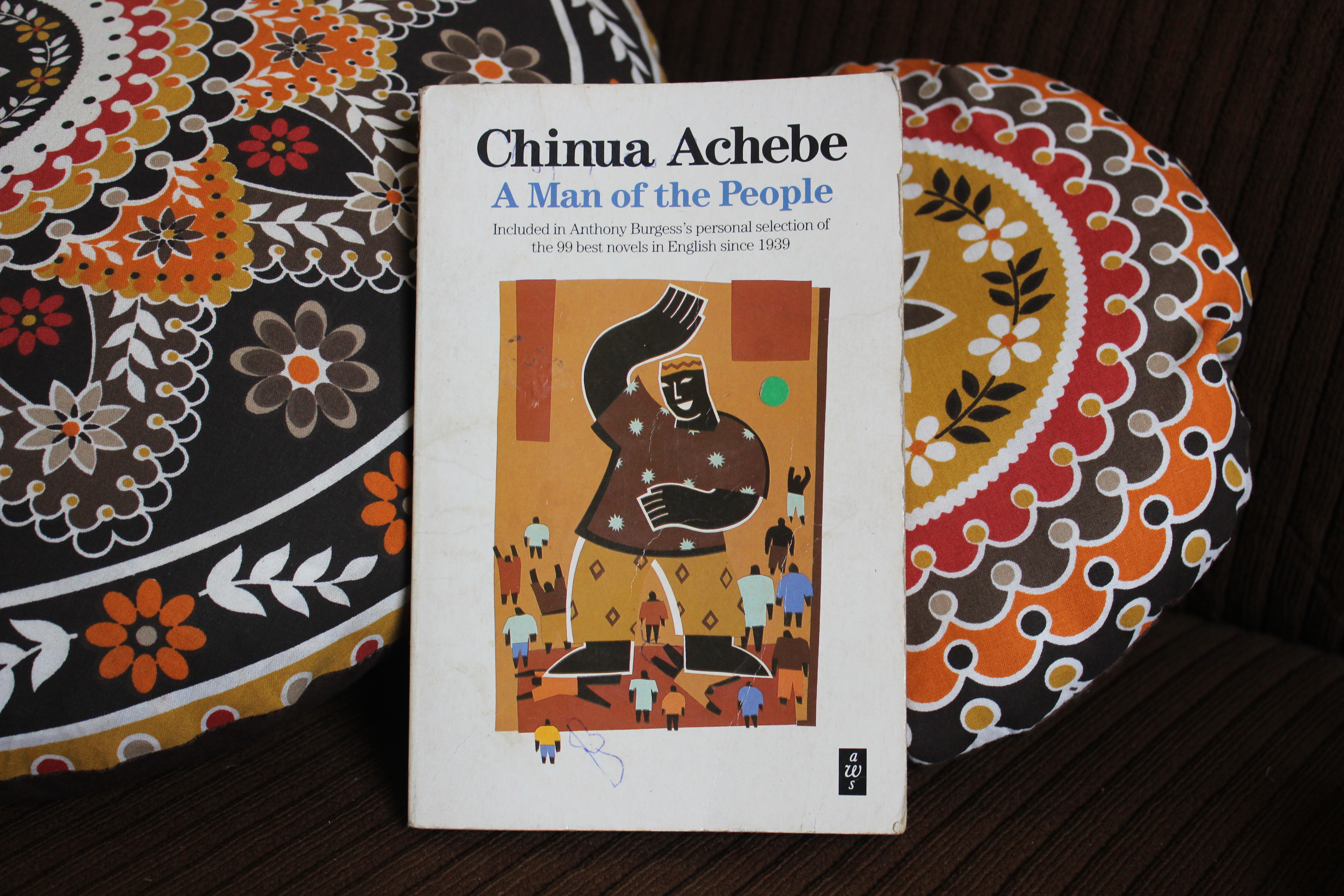
Then we meet the protagonist Odili Samalu a young village teacher, the son of a polygamous district interpreter, a former student of Chief the honourable M.A Nanga. Young he was, with every prospect that will make a politician court his loyalty. Like most young Africans, he longed for the big education of visiting Europe, but his enthusiasm for politics overshadows it. Odili is less enthusiastic of Chief Nanga and his likes whom in a country that just got independence from the colonial power, are becoming the next colonists. He was highly critical of their mismanagement of the coffee market which was the prop of the economy and the trigger for their countries financial crisis. He was defensive of Africa from the criticisms of the self-righteous Westerners. Understanding politics was important but difficult for him. Nights were when he tried to analyse his theory of why power was difficult to relinquish by African leaders.  He questioned the act of politics and its morality? Odili will later ask ;

What potent charm do politicians have? … I find myself wondering whether-perhaps-I have been applying to politics stringent standards that didn’t belong to it.

For Odili and Chief Nanga, what binds them together is smaller than what puts them apart. They are bonded by their fantasies for women, their student-teacher relationship and their tribal affiliation. Yet their idealisms for national governance were practically far apart. Their fantasy for same women creates a conflict, playing a definitive role for their political competition. Chief Nanga wrenched Odili’s lover Elsie from his hands. Humiliated, Odili sets his fight on morality which is questionable. How does he draw a moral boundary in sexual matters when he found it ok to go to bed with an Ambassadors wife? More so on what moral ground does he judge Chief Nanga when he takes advantage of the perks from his political office?

Vindictive Odili was set to revenge his lose by taking over Chief’s young palour-wife  Edna. The battle line in this book was drawn on the body of women. Perhaps Odili’s father was right in his perceptions that the mainspring of political actions was often personal gains. Odili will later admit this saying;

…My political plans which in all honesty I should admit had always been a little nebulous- until Edna came along. She had been like a dust particle in the high atmosphere around which the water vapour of my thinking formed its globule of rain.
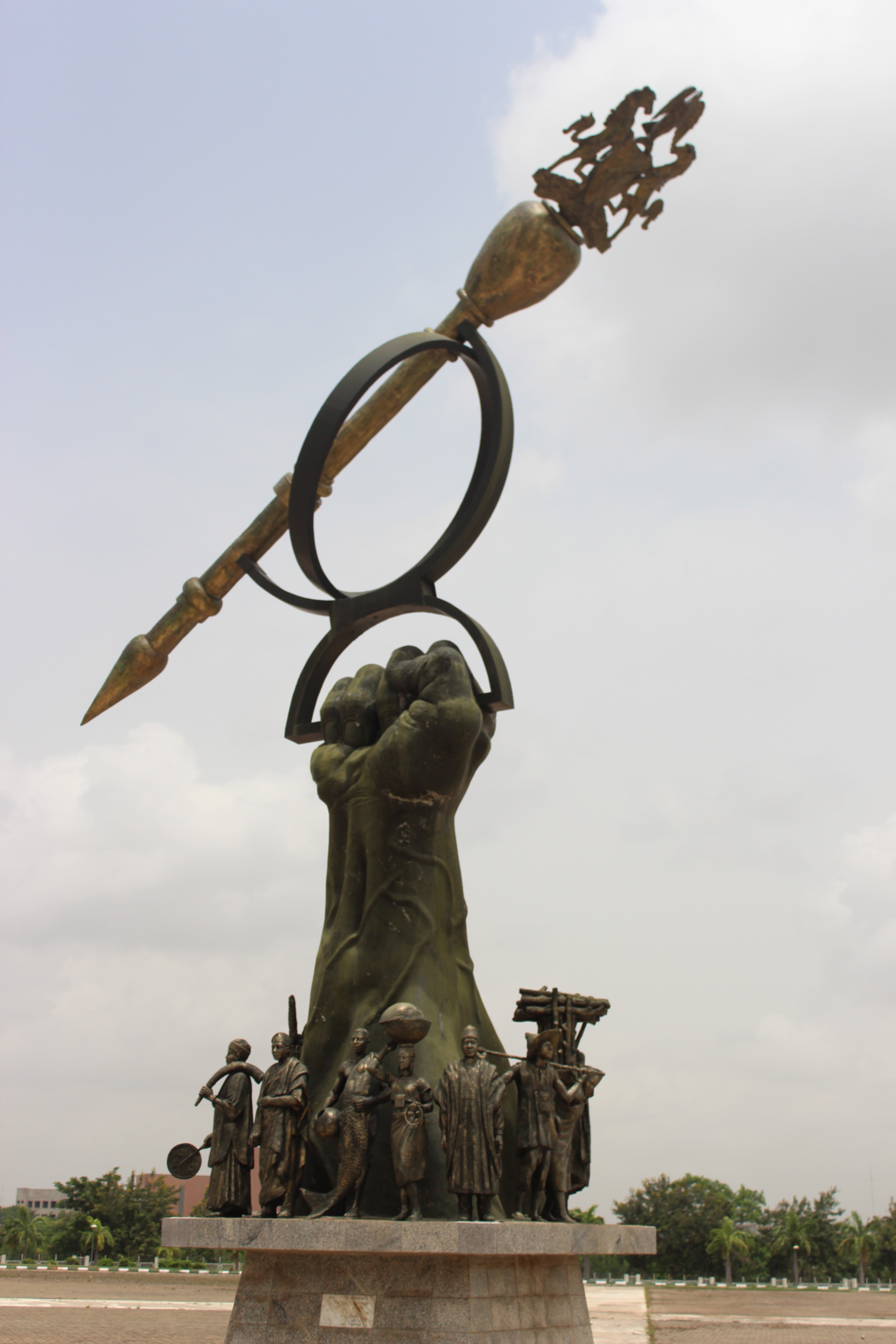
IMG_4775Consequently, Odili re-establishes his relationship with his old friend Max who co-opts him into their new political party ‘Common People’s Convention’. After years of watching capitalist politicians with deepening disillusionment, they and other young people understood that when worthy people leave politics to the unworthy ones, corruption happens, and such cannot go on indefinitely.  The youths were hence determined to drop cats among the pigeons in their country’s political space.

After years of lethargy, the impending election created the perfect opportunity to announce the young people’s party. Odili was again concerned on how they could fight corrupt politicians without soiling their own hands. But Max the technocrat was more objective than sentimental. Their participation in politics was not without fatality, it was the tragedy of this book. Odili is beaten black and blue to a state of unconsciousness by Chief Nanga’s thug making way for Chief to win the election unopposed.  Max is murdered by his opponent Chief Koko’s thug, and his fiancée Eunice is jailed for instantly shooting Chief Koko to death.  In Odili’s words,

Max was avenged not by the people’s collective will but by one solitary woman who loved him. Had his spirit waited for the people to demand redress, it would have been waiting still in the rain and out in the sun. But he was lucky.

With so much tragedy experienced by the youth in a bid to save their country from the grip of capitalist politician, it is easy to conclude that they failed, but I thought different.  With their action, these young people were catalysts who stirred up the polity, bringing change.  The election thugs of the politicians refusing to be disbanded after the election formed bands of marauders, beginning a reign of terror.  Consequently, the Army staged a coup that had chief Nanga and other members of the corrupt government parliament jailed. Thus, Max became a hero of the revolution.

While reading this book, I sought earnestly for what made the writer Chinua Achebe a most wanted man by the Chinua-Achebe10--AFP-Nigerian government in the season it was published. Significantly, it presented a post-colonial Africa and principally Nigeria, where corruption and conflict of interest had become the order of the day amongst leaders.  Its climax in a coup d’état arguably made it a predictor of the near future of many African countries and one could herein understand why writers will remain enemies of tyrant governments. Most striking was the series of violent transitions that Nigeria survived shortly after the publication in 1966, seemingly making Achebe a prophet.

Almost fifty years after A Man of the People was published, not much has changed in the governance of African countries. I am tempted to say that this book will never grow old, but I pray it does. I encourage young people to read this book. Perhaps we can hear the author again making a clarion call for youths to understand that a genuine democracy requires their participation. Youths remain a formidable social force and the most active segment of the society, but they remain exploited as politicians pun and their participation in politics are characterized by the violence they create.

It is my desire that young people can once again set cats among the pigeons. It is my prayer that a new Africa emerges to cause a wrinkle on Chinua Achebe’s book  A Man of the People.

– Written by Adaobi Nkeokelonye
On my shelf this season…

IMG_7448If you could give me just one gift for the rest of my life, make it a book. Books are gifts we never get tired of opening. They are the cheapest form of tourism I discovered; it amazes me how I travel to different parts of the world just inside one book. So I felt loved to get fantastic gifts of books from my friends Zoe, Mun, Samtito and Vicky. I did not forget to reward myself with some books I have long desired. In the same spirit, I am sharing the list of books I received and will be reviewing this season.

Nathan Filer ©telegraph.co.uk

Nathan Filer ©telegraph.co.uk

I am grateful to my inspiration Muneera Parbeen for the gift of ‘The Shock of the Fall’ by Nathan Filer. Aside appreciating that reviewing this book will partially de-list me from being stereotyped an ageist by some of my critics, I am excited about this book because it captures a peculiar group present in our society but marginalized. It projects the place of care and support in sustaining the well-being of persons receiving mental healthcare services, while sharing their realities. The author Nathan Filer is a young British writer. His debut novel The Shock of the Fall has won several major awards, including the 2013 Costa Book of the Year and the 2014 Betty Trask Prize.

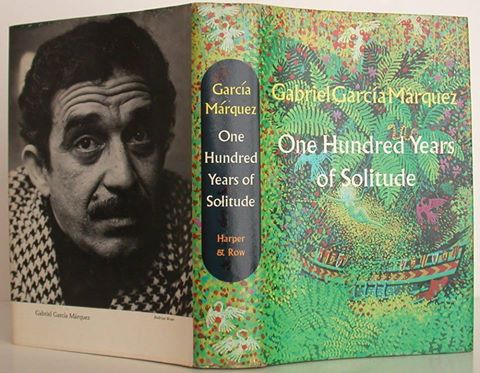
10152999_10152346295389914_5621460594907841966_nMany thanks to Samtito Olatito, I will be reviewing more collections of books I have yearned for. ‘One Hundred Years of Solitude’ and ‘Memories of My Melancholy Whores’ by the late Colombian writer Gabrielle Marquez. When this famous writer Gabriel José de la Concordia García Márquez known as Gabo for short passed away last year, I felt bad I never read any work of his while he lived. But the saying that writers never die is true. Gabo still lives through his books. ‘Memories of My Melancholy Whores’ is a controversial love story weaving together the tales of a 90-year-old man and a pubescent concubine. ‘One Hundred Years of Solitude’ chronicles a fictional South American rural community Macondo highlighting their challenges and the fabric of their realities.

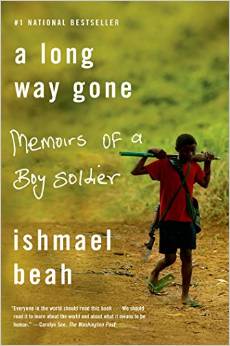
beahGravitating away from fiction, I will be reviewing memoirs that particularly focus on experiences of young men caught in conflict spaces, exploring the impact of the choices they make. I thought this will require my doing a cross-generational reading. So in the context of the older generation, I choose ‘All Rivers Run to the Sea’ a memoir by Elie Wiesel, a holocaust survivor and a man I adore. Alongside for the younger generation, I am reviewing ‘The Terrorist’s Son, a story of Choice’ by Zak Ibrahim and ‘A Long Way Gone’ memoirs of a boy soldier by Ishmael Beah.

Moving to books from Asia, I have a recommendation by Professor Grace Chin, who I admire, to read Raden Adjeng Kartini’s ‘Letters of a Javanese Princess’ a feminist book highlighting early 20th century treatise on education and the unfair treatment of native Javanese women. Raden Kartini is hailed as Indonesia’s fervent feminist writer. I am glad to finally have this book on my shelf and review list.

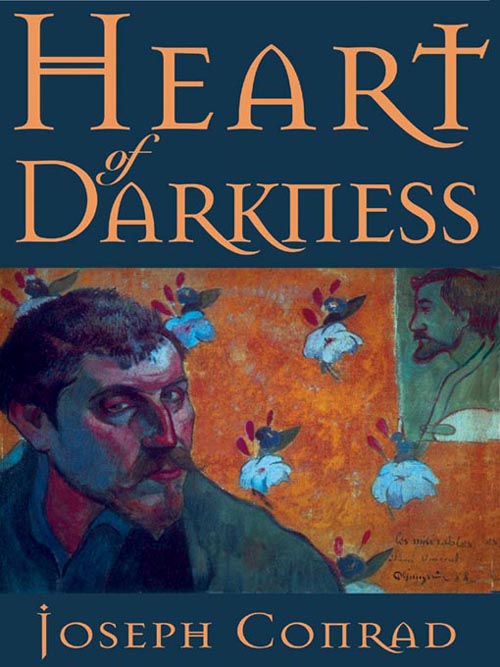
heart-of-darkness-paul-gauguin‘The Heart of Darkness’ by Joseph Conrad brings me back to Central Africa. This controversial Novella has been notorious for its narratives which explores European imperialism, colonialism and the dichotomy between civil society and savage ones. I will be revisiting this work to officially review it here, being mindful of criticisms expressed by my beloved late Chinua Achebe who in a public lecture “An Image of Africa: Racism in Conrad’s Heart of Darkness” described Heart of Darkness as “an offensive and deplorable book” that de-humanized Africans.

Thanks to Vicky my ever faithful reader and friend, I also have Chinua Achebe on my list. ‘A Man of the People’ by the late Prof. Achebe will finally grace this blog. I find this book critical to the understanding of Africa’s perception of democracy. In a season filled with burning passion and sentiments ahead of sensitive elections in the African continents, this book will give insight to the role of young people in governance within their polity.

When a writer shares a tale, we the readers receive and understand it differently according to the lens we wear. I have continued to read books, especially fiction books with my international development goggles in place. I encourage every lover of literature to join me on an exciting ride through the pages of books listed here. In the spirit of sharing, let’s all bring to the fore our objective perspectives in a constructive way to continue driving the discussion on linkages between literary fiction and international development issues.

To you my friends, I say thank you for these gifts, they will remain for a life time.


Written by ~ Adaobi Nkeokelonye

The Color Purple by Alice Walker

I think it pisses God off if you walk by the colour purple in a field and you don’t notice it. By reading this book, I made God happy. The color purple written by Alice Walker was set in the time when Horses and their wagons gave horspitality. Then lived Celie and her sister Nettie, there were many Mr._____; Albert, Alphonso. There was Harpo, Sofia, Shug Avery and others. In those days, the enemy was not the horse thieves; it was Mr._____ .

Celie wrote many letters to God about the days of her life. Whether God will read her letter or No, Celie went on IMG_7683writing. She told God about Celie the orphan and Celie the mother of two children conceived with her father and later given out for others to raise. She told God about other people’s children she nursed; the good  and the bad ones, their good and their bad days. With hints of humor, she describes the children’s prevailing illness in winter, ‘they have flue , they have direar, they have newmonya,… twoberkulosis.

Celie shared her life as a victim of two Mr._____s . The parts of the story that constructs the character of Mr.____  stinks with all sorts of domestic violence; rape, battery, emotional abuse… She expresses this strand of theme as captured below.

‘Harpo ask his daddy why he beat me. Mr._____ say, cause she my wife. Plus she stubborn. He beats me like he beat children. He say, Celie, git the belt. The children be outside the room peeking through the cracks. It all I can do not to cry. I make myself wood. I say to myself, Celie, you are a tree. That’s how come I know trees fear man.

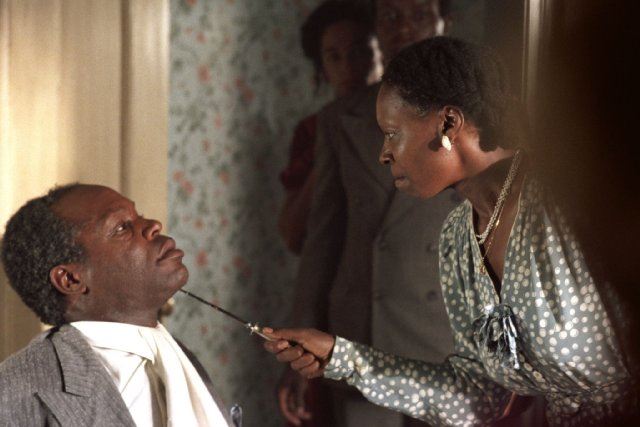
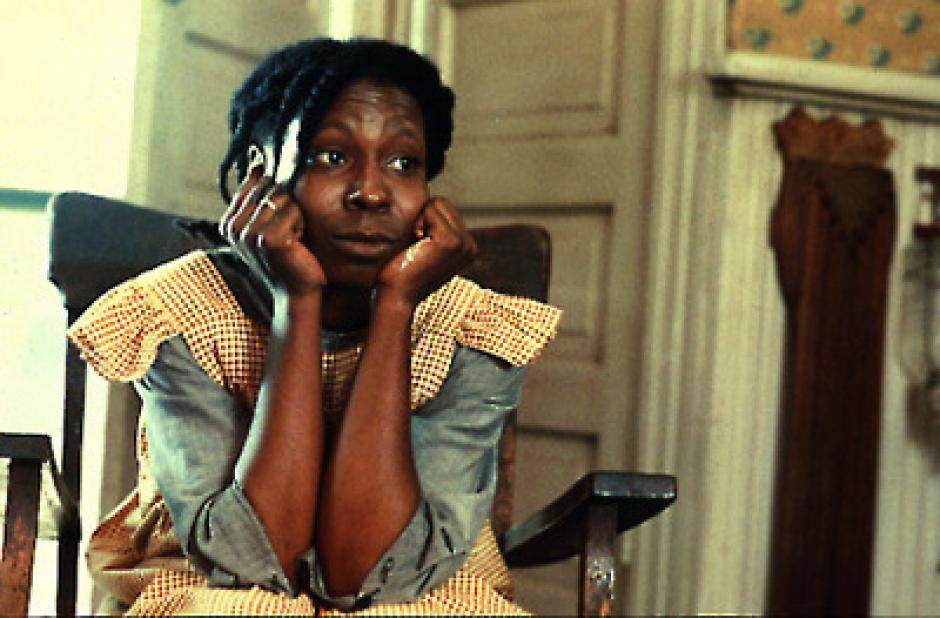
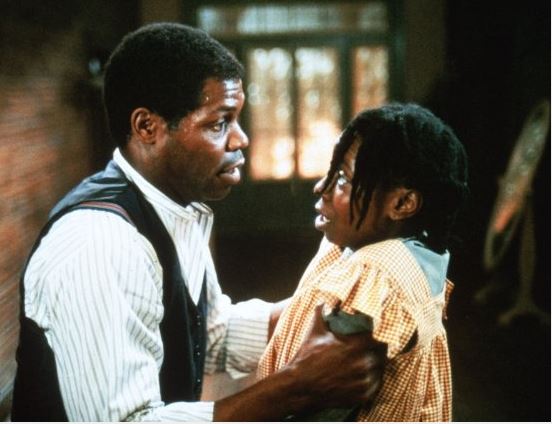
Scenes from the Movie The color purple

A scene from the movie ‘The Color purple’.

Using the Mr._____ without a name for a better part of the book can be further understood in her words ‘Most times, mens look pretty much alike to me’. This generalization raises the question on whether the male gender had a monopoly to the kind of violence Celie  experienced. I asked myself if violence was innate or socialized. Could men also be a victim of domestic violence? Could women like Celie who played victim also become enablers, reinforcing what they have been given trans-generationally?

My questions found answers in the arrival of Harpo’s wife Sofia who represents the defiant new generation of amazon sisters that are not shy or afraid to backtalk. Mr._____ advices Harpo to hit Sofia to show who got the upper hand. Celie surprisingly concurs to the idea that ‘Nothing can do that better than a good sound beating’. Sadly, the next day, Harpo returns back to them with a black eye and a silence which in a way highlights the silent crime of male abuse present in our society. After some confrontations, Celie confesses that indeed, ‘some women can’t be beat, Sofia one of them’.

Harpo feeling his body size made him weak to Sofia, is triggered to gluttony with the expectation he will get as fat as Sofia; but only his belly gets fat. Harpo and Sofia show that gender roles are indeed fluid. Though Harpo desires Sofia to be just a ‘wife’, she was instead the ladder carrying, roof nailing girl who hunts with bow and arrows and batters her husband deservingly.

The character of Celie in the movie ‘The Color Purple’.

Harpo’s character breaks the bleak boundary of traditional gender roles. He questions the normative division of labour in an age where women were caught in the field cotton chopping, labouring all day tending their crops and praying.

Describing the impact of this intense work, Celie says ‘I’m roasted coffee bean colour now.’ This clearly makes a case time poverty, a concept that is not fully explored among women in developing countries. Celie could not even get time to see her fantasy superstar queen-honey-bee; Shug Avery, no matter how intensely she desired to.

In an ironic way, super star Shug Avery who also is the love of Mr._____ life, walks into Celie’s life sick with twoberculosis. Shugs presence created a paradigm shifts, an epiphany! Though a superstar, Shug is yet another human with life’s ravages. Unlike she appeared in the picture, she was only kinky haired, black as tar woman with legs like baseball bat. Thanks to her, the identity of  Mr._____ who Celie married is revealed as Albert. He is de-constructed with a display of all his weaknesses.

Celie nurses Shug to health and in return Shug protects her away from Mr._____ Albert’s violence. She gives her access to piles of letters from her only sister Nettie which Mr._____ Albert has hidden from her. Shug teaches Celie sexuality, empowering her with sexual and spiritual freedom. Through Shug’s character, the author re-constructs the identity of Celie‘s God sharing why sinners have more good time with less consciousness of the injected fear of God.

‘Shug say, Celie, tell the truth, have you ever found Godin church? I never did. I just found a bunch of folks hoping for him to show. Any God I ever felt in church I brought in with me. And I think all other folks did too. They come to church to share God, not find God.’

With Shug’s impact and influence, Celie finds the courage to question her relationship with a silent God she has written letters to all these while.

‘What God do for me?…Yeah ,I say and he give me a lynched daddy, a crazy Mama, a lowdown dog of a step pa and a sister I probably won’t ever see again. Anyhow, I say, the God I been praying and writing to is a man. And act just like all other mens I know. Trifling, forgetful and lowdown.’

Finally Celie’s life just began. In one sentence, she expressed the new dynamics. ‘Dear Nettie, I don’t write God no more. I write to you.’  Writing and reading and from Nettie her sister who is now a missionary in Africa served a window for Celie to learn about Africa and coincidentally how the children she assumably conceived through incest with her dad were doing now under Nettie’s care. She learnt about trains, ships, and slave trade which she could liken to the experience of Sofia eventually losing her freedom for five years in jail after fighting the white mayor; Sofia became a slave to Mrs Millie the Mayor’s wife.

Alice Walker showed a mastery of the language art with a seamless swing from uneducated Celie’s broken English to learned Nettie’s standard English. The stories are woven perfectly allowing most characters second chances in life. For many of them, life took them on full circles, sometimes returning them to relationships with the devils they left behind. In a moving reunion, the author brings to an end a life of absence between two sisters.

A scene from the movie ‘the color purple’.

I am not at all surprised ‘The Colour Purple’ bagged the Pulitzer Prize of 1983 and also won the National book Award. Doing a summary of this book is pure injustice to it, this evergreen book is wholesome. It addresses racism, sexism, and the social constructions of gender roles. It ruffles the normatives of organised  religion. It makes a perfect complement for discourses around gender based violence which CEDAW (Committee on the Elimination of Discrimination against Women) addresses. It recognizes violence as constituting a violation of women’s human rights; that is disproportionately directed against a woman because she is a woman or that affects women disproportionately. Alice Walker’s narratives resonates deeply with the understanding of violence as an act that inflict physical, mental or sexual harm or suffering, threats of such acts, coercion and other deprivations of liberty.

The Color purple  explores issues of identities, questioning all colour-based definitions of the African identity in the dichotomy between the descendant of African slaves seeking to lay claims on Africa like the Missionary Nettie and Samuel, and the people of Olinka who don’t accept them as Africans.

While examining rural development issues and the conflicts of imposed civilization, it also highlights the issues of unpaid work and time poverty; a concept least explored for women in developing countries.

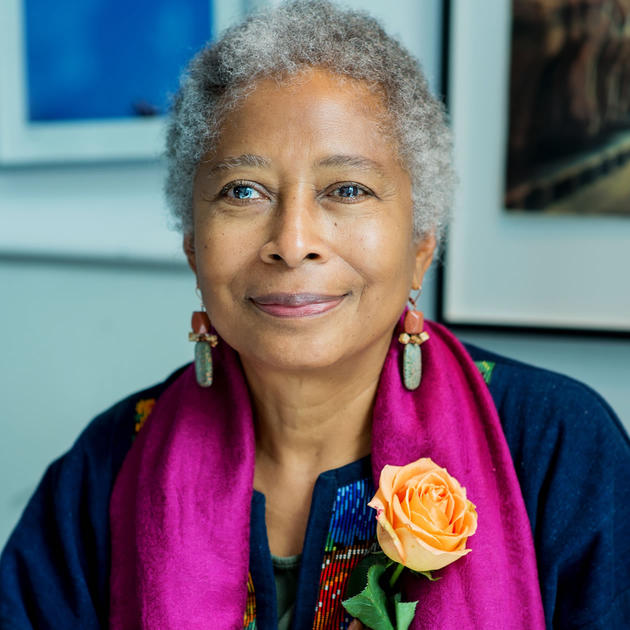
Author Alice Walker. Photo by the South Bank Centre. http://tiny.cc/dnx6sx

Author Alice Walker. Photo by the South Bank Centre. http://tiny.cc/dnx6sx

This epistolary novel published in 1982 made an indelible impact. It’s letter written format served as a great tool for communication and  reflective practices. Deservingly, the novel has been adapted into a movie which equally expresses the power to communicate the issues raised by the author.

To Alice Walker, I would have titled this book ‘A letter to God’ as your deconstruction of God remains the best gift I received from it; I learnt that God is inside me as me. I admire the spiritual awareness you have shared here. May you remain the Big Purple Flower in my hair.

Written by ~ Adaobi Nkeokelonye

No Hoodie No Honey

Just in my very early twenty’s then, I had become excited about carrying a condom. I was grateful for the confidence my new knowledge on sexual reproductive health gave. I used to be the naive girl who could only say NO but never knew how to say YES in a sexual encounter. I was the shy girl who could not be caught dead discussing sex, purchasing or owning a condom. Like many other girls caught up in the socially constructed ‘good girl myth’ I too would deny that sex happens, despite our beliefs. We all seemed to think that unplanned pregnancy, unsafe abortion, HIV and other Sexually Transmitted Infections (STIs) only happened to ‘bad girls’ until it happened to the ‘good girl’ we knew.

IMG_0348 reduced (1)

Adeola Olunloyo is the NPO – BCC & Advocacy UNFPA, Nigeria.

Listening to Adeola Olunloyo my trainer and mentor in those days was remarkable. From her, I learnt the most important lessons about my reproductive and sexual health. This was a game changer; it meant I was in charge of my sexuality. I had power over unplanned pregnancy, sexually transmitted infection and a promise of a fulfilling adult life. My best of her topic was how to wear a condom.  I was awed at her mastery of the penal model. Watching her facilitate the session that sunny afternoon at the youth camp, I knew right away that I will be wearing her shoes.

There began my journey as a reproductive and sexual health trainer.  The climax was teaching shy clergy men and women the ABC of condom use; Exhilarating! Years passed, camp to camp, class to class, I met young boys and girls excited and many times shy to learn about condoms. Broad shouldered, bold faced, the boys will step out in bravado volunteering to prove their skills at wearing a condom. The girls remained sticklers to the good girl myth; which often left them ignorant of their rights and role in managing what happens in and outside their bodies.  After all, the boys should know it all as the girls are better naïve.

Photo by Inhabitat.com/Lori Zimmer

Photo by Inhabitat.com/Lori Zimmer

Year after year and not one boy or girl though sexually active got how to rip and roll a condom right. Reflecting on each failed attempt, I realised that while they should have been taught, perhaps no one did teach them. Most boys learnt to wear condoms by instinct and the few lucky girls learnt from their inept boyfriends. This pattern extends to knowledge of all things empowering about sex, the contraceptive measures, and the negotiation skills among others. This socialization contributes highly to the cases of teenage pregnancy, unsafe abortion, and new cases of HIV infections in our society.

images (2)

Photo by vukuzenzele.gov.za http://tiny.cc/4ay3px

Nothing gets a girl out of the classroom faster than unplanned pregnancy. From the story of Precious in the 1996 novel ‘Push’ by Sapphire, to Raven in ‘SpellBound’ , Aisha in ‘Chill Wind’ (both by Janet McDonald) and others, all of them tell tales of broken girls forced to drop out or change schools. For most of them, once was enough; they didn’t need a second sexual encounter to get pregnant. Suddenly they are being asked to PUSH…, experience motherhood in their childhood, and watch the crib rather than their books. For many, abortion or adoptions are familiar experiences, and for even more unlucky ones, HIV is an addition.  All of these stories tell tales of altered lives, girls falling apart in an emotionally crippling way, limiting development and economic potentials.

The No Hoodie No Honey project by UNFPA thrills me. Finally, a bigger platform for addressing things we would rather not talk about is here for the African youth. The videos are engaging and educative, the characters familiar. The evidence-based IEC materials developed under this project potentially drives the discussions that empower young people; especially girls to protect themselves from unplanned pregnancies, STIs by practicing safer sex.toju1 (2)

Ratidzai Ndhlovu, the UNFPA (United Nation’s Population Fund) Nigeria’s representative shares that the No Hoodie No Honey campaign further expresses the importance of young people to the UNFPA mandate. Hence, by expanding access to sexual and reproductive health (SRH) information and services for young people (especially girls),  No Hoodie No Honey project will facilitate a value shift and paradigm shift among boys and girls to create a society where neither culture  nor beliefs will deny women the freedom and power to negotiate safer sex.

Every year, 16million girls under the age of 18 give birth especially in low and middle income countries. Many of these cases are unplanned. This has implication for population growth and economic development. In putting the global population issues on the spotlight, the World Population Day (2013) focused its theme on adolescent pregnancies and the need to take action. Yet, the adolescent girl with a swollen belly continues to live among us.

It is my hope that young people will like I did years ago, take advantage of this platform to address their knowledge gaps on reproductive and sexual health issues. I do hope that young girls will stop their assumptions and take charge of their sexuality; negotiating when, where, and how they experience sex.

Dear girls, unplanned pregnancy is violence against self, don’t be left behind, don’t be the girl who couldn’t say NO!


Written by  ~ Adaobi Nkeokelonye.

An Ebola Tale…

The memories began to flow, breaking through the discouragement that was silting up his love for Ma’Kanu. He remembered the Ebola fever outbreak at the end of a state-organised student’s excursion into a wild game reserve. Four of the twenty-four children on the excursion had already died before the Hospital Extension Team from Enugu came for Somto. The Health Officer was a demi-god in those days.

Quarantine! He had screamed.

Odozi may have been located in the lower ranges of Milken Hill, but the sixty-seven kilometres that separated the village from Enugu may as well have been sixty seven years in the past. There were no facilities to retreat anything as virulent as Ebola. It was either the Otawon Infectious Diseases Hospital or nothing.

Ma’Kanu visited Otawon, a desolate place. She found that the IDH was run in the interests of the outside society, rather than the inmates who often came in with one and were buried with a cocktail of infections. A referral there was a deferred death sentence.

She took his antibiotics placebos and went AWOL, returning to Odozi and moving the other children to Dada’s. She lived alone with the dying Somto until she nursed him back to health, to the grudging admiration of a stymied Health Officer…

Ma’Kanu battled the haemorrhagic fever into remission. And her faith was too strong even for the mildest muscle cramp to afflict her.

Slowly he (Somto) pledged, goose bumps breaking out over him: For Ma, I’ll tell my best tale tonight.

Somto’s reflection of his foster-mother’s love is provoked by her request for a last tale as she answers death’s call. IMG_6761Reading this excerpt in One More Tale for the Road by Chuma Nwokolo was a pleasant coincidence. I have almost given up my search for a novel that aptly captures the reality of the virulent Ebola which the world is struggling to contain. I almost gave up thinking that there was no accessible work of fiction that dealt with this comprehensively enough to serve as a discussion starter. Published in 2003, One More Tale for the Road was far-sighted, with characters and scenes that fit today’s reality.

The growing epidemic has indeed sent a shrill wake-up call globally. The above excerpt highlights the isolation of Ebola patients with the scary word QUARANTINE! The lack of structures for responding to treating this scale of disease especially in Africa is stressed.  It draws attention to the risk and helplessness that families and loved ones of patients face in desiring to support their beloved through their illness. ‘Maintain the ABC Rule’ they are told, avoid body contact. This land of vigorous handshakes and hearty hugs has lost its essence, now you certainly can’t hug or hold anyone. This is totally against human nature and unrealistic.

The stigma and discrimination is however not as painful as the lonely and un-dignifying death faced by patients, more so children as was mentioned above.

This book helps in situating strongly, the family as an important institution in the present day discussions on care and support for victims of all violent epidemics. More than any war, Ebola is potentially anti-family; the destruction of families is the fundamental tragedy of this epidemic as can be seen in the Liberian story of Kaizer Dour’s family .

19-ebola-fight

photo culled from Indialive.today http://tiny.cc/1pv3px

Beyond highlighting the Ebola issue, this novel brought to bear the subject of adoption and foster care which is often seen as an anathema in the African society. It questioned the concept of family, challenging the social constructs by deconstructing each character’s root to help them embrace the life they have.  One lesson I take away from engaging this book is that there are no ideals; each person’s reality is indeed their ideal.

I put down One More Tale for the Road praying that like the characters therein, may we all find grace to embrace new realities. There are times we must express love and kindness from a distance, there are times we must stay away from people we love and be with ourselves.  This is it.


Written by ~ Adaobi Nkeokelonye

Say You’re One of Them.

Uninhibited, Despairing, Tragic, Frustrating, Bleak, Vivid, Provoking!  Talk of a book you will hate to Love… this is it. This Jesuit Priest cum writer Uwem Akpan has done for vulnerable African children what I think many writers, legion of documentaries and western mass Media have not. He travelled into the depth of these children’s darkness with a Candle light to reveal to the world how life has smeared their windshields.

Despite being a New York Times #bestseller, making the Caine Prize list and being notably selected by the Oprah Book Club, I was discouraged IMG_6751from reading this book severally by friends who found it a very difficult read. Now I know why. The author Uwem Akpan in this collection of short stories did not write to entertain, he wrote to inform. In capturing the detailed realities of children in modern Africa, the writer ought to write like a child. Writing in the voice of distressed children is no easy task, more so reading such stories. From the stories in this book, every reader will see in detail how a child’s giggle is muffled by violence and fear, how their spirited dance is paused because the earth on which they stand is soaked with blood.

From the story of Maisha in An Ex-Mas Feast (which I am saving for a later review), I continued to the disturbing novella sized Fattening for Gabon which reveals the footprints of slavery as Kotchipka (Pascal) and his sister Yewa (Mary) are trafficked by their uncle Fofo after their parents bow their lives to AIDS in their home town Brafe.  Indeed selling a nephew could be more difficult than selling other kids. Though the chains tying their hands are invisible, either way, they are sold like chicken in an open market.

What Language is that? Adults ask this question when we try to crack the code of our children’s language. The story reflects on the relationship of Selam and her best friend as their parents inject into them the language of hatred triggered by their misunderstanding of faith difference. Like in a typical scenario as it happened to most of us, Mummy pats a space between her and daddy for the child to sit. Then these words that desecrate a child’s innocence follow. ‘Honey, we don’t want you to play with that girl anymore; the Muslim girl’ mummy said. These girls mock their parents’ response to faith difference by improvising a new language that can only be decoded by those who still love as children do.

Religious imageries litter many corners of this book; Luxurious Hearses captures the impact of religious conflict on children. Two brothers Yusuf and Jubril inherit the underserving struggle of choosing whether to identify with the Christian or Muslim faith years after their parents’ marriage end. Jubril and his brother Yusuf were born out of a relationship that was ethno-religiously conflicting, hence becoming a community concern. His parents Aisha and Bartholomew‘s union certainly unnerved the people of UKhemehi. These two brothers gave their life to fighting for a faith identity as Yusuf is stoned to death for apostasy.

The Author Uwem Akpan

The Author Uwem Akpan

Jubril’s journey from the north to the south of Nigeria is symbolic. Like all the children in this book, he was on the path of finding an answer to a torn identity and forced to say ‘I be one of you’.  The danger of having a dual ethnic identity could not be better captured than in the experience of Monique and her toddler brother Jean in My Parent’s Bedroom. This will serve as a torturous ending, perhaps the most tragic short story I ever read.

‘You have to learn to take care of Jean, Monique’. Her mother Maman says as she prepares her daughter for a life without her in war torn Rwanda where neither god nor marriage was strong enough to dilute any tribe’s blood.

Thinking of how the United Nations may have helped save the Rwandan genocide is hopeless as was also captured by Monique’s parents.

‘I think we should run to those UN soldiers by the street corner…the soldiers are our only hope’ her father said.

‘They?  Hopeless!’ Maman responded.

Their home once full of love now smells like an abattoir, their ceiling creaking and sagging in the middle; it’s full of Tutsi’s hidden by her parents. Even Maman goes to hide in the ceiling every night with a lie that she sleeps out.

‘Nobody is telling me the truth today. Tomorrow I must remind them that lying is a sin’ Monique said.

When tomorrow finally came, Monique’s only inheritance was her little brother, a broken crucifix and a gruesome memory of witnessing her father unavoidably machete her mother’s head in an ethnic cleansing ritual right in their bedroom.

‘There is blood everywhere…it flows into Maman’s eyes, she looks at us through the blood-the blood overflows her eyelids and Maman is weeping red tears. My bladder softens and pee flows down my legs towards the blood. The blood overpowers it, bathing my feet. Papa opens his eyes… he bends down and closes Maman’s eyes with trembling hands…Papa covers Maman with a white bedspread and goes off with the mob without looking at me or Jean… Jean is startled by my shout. He stamps around in the blood as if he were playing in mud.

Little Jean yanks the cloth off Manan and tries to wake her. He straightens her finger,but it bends back slowly, as if she were teasing him. He tries to bring together the two halves of Maman’s head, without success. He sticks his fingers into Maman’s hair and kneads it, the block thick like red shampoo. As the ceiling people weep, he wipes his hands on her clothes and walks outside giggling.

Her mother’s words remained a legacy that will ensure she and her brother survives with an identity torn between the Hutus and the Tutsis.

‘When they ask you,’ Maman says sternly without looking at Monique, ‘say you’re one of them, Ok?’

‘Who?’ Monique asked

‘Anybody’ Maman responded.

With two novellas and three short stories in one book the writer projects many international development issues such as child trafficking, IMG_6745prostitution, and ethno-religious conflicts as it affects children in Ethiopia, Benin, Nigeria, Kenya and Rwanda. This writer shows that he is a man acquainted with grief as he portrays nuanced stories of Africa’s abused and battered children in a way that cuts close to the bone. Children in these stories lived struggling like ants whose holes have been blocked.  Their glory and resilience shines forth as their innocent spirits collides with unpleasant realities of culture, religion and social systems.

One other reason this may be a hard read especially for Non-Africans is the use of hybrid English and local terms which it adopts to give the dialogues a local flavour. However I recommend that everyone disobeys those that discouraged me and read this book. You will be confronted, challenged and bothered to your core. Finally, as the writer intended, it will leave you unsettled. But to experience all of this, you must exercise the patience of a still water; these stories are not fast paced, they unfolded slowly.

I am not sure how to fully express gratitude for this book. Uwem Akpan once said and I quote ‘I think fiction allows us to sit for a while with people we would rather not meet’. I agree with him; I would rather not meet Monique, Maisha, Jubril , Yusuf ,Jean and others because if I do, I cannot say I am one of them.

Written by ~ Adaobi Nkeokelonye

Diaries of a Dead African

With a gift of four attractive books written by Chuma Nwokolo, I was caught in the pleasant dilemma of which one to devour first. The final testament of a minor god looked natural with the picture of a tree and a promise of 100 poems telling how small gods die. The cover page of How to spell Naija with its two volumes of 50 tales apiece was strongly testing the patriotism in me.  The Ghost of Sani Abacha conjured up the memories of the late autocratic general with a promise of some sizzling political stories. Then the Diaries of a Dead African in its noble colour caught me. I must admit my affection for anything with the word ‘Africa’, more so my excitement for reflective writing which any novel in a diary structure often is. In truth, I sentimentally choose the Diaries of a Dead African. Was I disappointed? No! It was absolutely a remarkable read and I can’t wait to read the others. IMG_5925   In Diaries of a Dead African, the author Chuma Nwokolo drives readers on a journey through the collective memories of three different characters spread across one year and five months of their lives. Calamatus and Abel two brothers and their supposed father Meme Jummai all got a chance to tell their story in an incredibly comical way. As their lives end tragically, each man hands the baton to the next surviving character to finish the story.  Meme Jummai’s house is made up of a poor farmer father and a mother notorious for adultery. They all had a faithful pet whose name was Poverty and shared an ancestry they couldn’t take liberty with.

Calamatus was the extremely sincere conman whose life was a journey of revenge for everyone he thought owed him. Castrated by the sudden sneeze of the mid-wife who circumcised him, he was determined to identify this nurse from hell who sentenced him to a life of private shame.  Dead at 25 in a fire like his father, his short-lived success as a 419 conman gave him the money he craved for to alter the shameful pedigree his father’s life and death had bestowed to them.  More so, he lived to mock every constituted authority and tradition of the Ikerre people. His elder brother Abel an unsuccessful writer, who though plagued with poverty and hard-luck was totally disenchanted from wealth even when it fell on his lap as an inheritance from his late brother’s fraudulent deals.

Author of 'Diaries of a Dead African' Chuma Nwokolo.

Chuma Nwokolo: Author of ‘Diaries of a Dead African’

Within the context of fiction and development, the character of their father Meme Jummai struck me most. I met Meme as he was almost dying of hunger. His barn had two poles strung with yams a week before, but they all disappeared when his wife Stella left him for a Vulcaniser, taking with her ten yams for every son she gave him, even the dead ones.  Its two weeks before the village harvest season, Meme is left with a pregnant goat and two tuber of eight inches piece of yam. His farm implements, a gun, an inherited TV with broken dial and his diary were his only asset. These he guarded like his own life, but for his diary, all others were later lost.

Adopting the poverty scorecard often used to determine impoverished targets for development intervention, Meme Jummai’s will be classed as poverty personified. Even the poor called him poor. The author aptly uses imageries and synonyms to project his poverty in a moving way. Meme Jummai slept on a clay bed, no more owned a radio or a fan; he nursed his crop waiting diligently as no man could eat of his crop before the collective village sacrifice was made on harvest day.  Yet this harvest was eaten up by termites and beetles. He moaned;

Hunger is a terrible thing…

Hunger is a demon…

In hunger, larceny was justifiable…

Even when shame struggles with hungers, hunger consumes my shame…

I am looking face –to-face at starvation and I have to confess, he’s an ugly beast.

Hunger hung in the air. Food scarcity altered the meal-time hospitality traditions of the village. Days were when the only thing that moved in Meme’s mouth was his tongue. Suspense arouses each time Meme was close to getting food, yet most times he never did. Hunger sent Abel to jail, hunger provoked Meme Jummai’s tragic death. His diaries of these experiences had some thought provoking questions on the relationship between hunger and morality.

‘In all my adult life, I have never stolen another man’s thing. Could hunger change me, or was I a thief all along without knowing it’? Meme asked.

diary of a dead africanThis novel captures the reality of the poor rural farmers as they negotiate between nature, society, the law and their human need to sustain well-being.  It highlights with great details the reality of individuals within farming household relying on rain-fed agriculture in the tropical African country.  My teacher Robert Chambers researched extensively on the Concept of Seasonality. In this, he propounds the seasonal dimensions to rural poverty, appreciating the seasons when subsistent farmers suffer food insecurity; that season when farmers have to tend their crops with empty stomach scrapping the earth for household survival. These are seasons when everything is stingy; even the rain and the soil. The wealth of social capital which often makes up for lack of social security in Africa does not save one in this season. Mark Hudson in his book our grandmother’s drum reviewed here, was intrigued by the fact that there was indeed hunger and a season of hunger in a landscape of richness in Dulaba, Gambia. According to him, ‘the most disquieting thing about this hunger was that its effects were not easy to see’. ‘Was hunger depressing?’ he asked the women. Perhaps the characters in the Diaries of A Dead African has given detailed answers to Mark Hudson’s question; yes hunger is depressing.

Broadly speaking, there are many ways of learning about social development issues and in this case, household food security for rural farmers. One of them may be from reading research papers which reflect statistics and superficial information from diverse sources. The other one is in reading individual experiences devoid of statistic but vividly bringing us into a close intimacy with the situation and the experience as they are felt by people. The character of Meme Jummai has done just the latter, making a case for the 12.5% or 1 in 8 people of our global population who are chronically under-nourished. While he helps us understand hunger, his reality gives credence to the Rome declaration and World Food Summit Plan of Action focused on halving the number of chronically undernourished people on the Earth by the year 2015. Likewise, The Millennium Development Goals included a commitment to a further 50% reduction in the proportion of the world’s population who suffer from extreme hunger by 2015.

In Diaries of A Dead African, Chuma Nwokolo explores in very detailed way how hunger and poverty can rape the mind. He did this with such wit adopting an English language that uses a walking stick, giving amazing humour that will make a reader laugh at life’s tragedy right from the first page. I could have titled this novel ‘a laugh at hunger’ but in reality, it is hard to laugh at a hungry man. This author did an excellent job; I couldn’t help laughing at Meme Jummai and I couldn’t stop crying with him either.

Written by ~ Adaobi Nkeokelonye.

Black Boy!

Every time I read Richard Wright’s ‘Black Boy’, I wished it was fiction; fiction because ‘Black Boy’ is not a pretty book. This reality told from the eye of a teenage black boy was too disturbing to grasp as real. Perhaps this makes it a very important book especially for us to reflect back on how far we have come with the politics of colour  smearing the wind-shield of our lives, one generation to the other.

richard wright

Pics from http://www.haroldshull.com/id19.html

Recently, I have tried to map below in the language of the writer, scenes, incidence and thoughts that chiselled Richard Wright from being a victim of racism to being a racist himself. I now wonder; if Richard Wright were to do the book ‘Black Boy’ today, would the fabric of his story be much different?

 At last we were at the railroad station with our bags, waiting for the train that would  take us to Arkansas; and for the first time I noticed there  were two lines of people at the ticket window, a “white” line and a “black” line.  During my visit at Granny’s, a sense of the two races had been born in me with a sharp concreteness that would never die until I died. When I boarded the train, I was aware that we Negroes were in one part of the train and the whites were in another…  

I had begun to notice that my mother became irritated when I questioned her about whites and blacks and I could not understand it. I wanted to understand these two sets of people who lived side by side and never touched it seems, except in violence. When my mother told me that the “white” man was not the father of the “black” boy, was no kin to him at all, I was puzzled. “Then why did the ‘white’ man whip the ‘black’ boy I asked mother…

Uncle Hoskins had simply been plucked from our midst and we , figuratively had fallen on our faces to avoid looking into that white-hot face of terror that we knew loomed somewhere above us…Uncle Hoskins had been killed by whites who had long coveted his flourishing liquor business… A dread of white people now came to live permanently in my feelings and imagination. Nothing challenged the totality of personality so much as this pressure of hate and threat that stemmed from the invisible whites…I had never in my life been abused by whites, but I had already become as conditioned to their existence as though I had been the victim of a thousand lynching…

One evening, I heard a tale that rendered me sleepless for nights. It was of a Negro woman whose husband had been seized and killed by a mob. It was claimed that the woman vowed she would avenge her husband’s death and she took a shot gun, wrapped it in a sheet, and went humbly to the whites, pleading that she was granted permission to come to the side of her dead husband while the whites, silent and armed looked on. The woman, so went the story, knelt and prayed, then proceeded to unwrap the sheet; and before the white men realised what was happening, she had taken the gun from the sheet and had slain four of them, shooting at them from her knees….

Black boy

Pics from http://app.studysync.com/RichardWright

I had already grown to feel that there existed men against whom I was powerless, men who could violate my life at will. I resolved that I would emulate the black woman if I were faced with a white mob; I would conceal a weapon, pretend that I had been crushed by the wrong done to one of my loved ones; then, just when they thought I had accepted their cruelty as law over my life, I would let go with my gun and kill as many of them as possible before they killed me. The story of the woman’s deception gave form and meaning to confused defensive feelings that had long been sleeping in me.

‘Why are they so many black men wearing stripes?’…

“Man, what makes white folks so mean?”

“Whenever I see one I spit.” Emotional Rejection of whites.

“Man, ain’t they ugly?” Increased emotional rejection.

“Man, you ever get right close to a white man; close enough to smell ‘im?”… “They say we stink. But my Ma says white folks smell like dead folks.” Wishing the enemy was dead.

“Niggers smell of sweat. But white folks smell all the time.” The enemy is an animal to be killed on sight.

‘Whenever I thought of the essential bleakness of black life in America, I knew that Negroes had never been allowed to catch the full spirit of Western civilisation, that they lived somehow in it but not of it.’

‘The white boys and the black boys, began to play our traditional racial roles as though we had been born to them, as though it was in our blood, as though they were guided by instinct. … The roundhouse was the racial boundary of the neighbourhood… whenever we caught a white boy on our side we stoned him; if we strayed to their side, they stoned us. Our battles were really bloody …All the frightful descriptions we had heard about each other, all the violent expressions of hate and hostility that had seeped into us from our surroundings, came now to the  surface to guide our actions.

Flipping the pages of this harrowing bildungsroman of Richard Wright written in 1945, am checking the similarities and differences between his time and now. In the quickening events of civil unrest in Ferguson, in the unnecessary killing of young black boys, I can’t help but  observe that the similarities of most black boys in America of today are more numerous , more real and more important than any difference there is with this author’s time.  I suppose if Richard were to write today, he will also ask, ‘why was 17yrs old Trayvon Martin shot, why did Michael brown the 18yrs old boy deserve six bullets’?

In the end, racism is not natural; it begins with the social injection of systemic hatred.  As this emotional and intellectually crippling racial war continues to bloom, we must remember that we all, whether white or black, will be casualties.


Written by ~ Adaobi Nkeokelonye

Keeping Hope Alive

If there is an autobiographical book that woke me up to new realities, it is Hawa Abidi’s ‘Keeping Hope Alive’. In very simple ways, this book was an axe for the frozen sea. For a long while, I yearned to see the woman behind the story. Meeting with Dr. Hawa Abdi, her humility, her grace, her identity with her continent, her passion for a country that was almost unlovable and her faith in peace was comparable to none I had known. I knew I must take a piece of this woman for keeps in my world. Through our discussion which IMG_5650lasted over an hour, Mama Hawa as she is fondly called patiently answered to my entire question as can be read here. 

One thing was clear; the woman I read about was no different from the woman I met.  The book Keeping Hope Alive is a true representation of the ‘Mama Hawa’ I listened to. Beautifully written in the tone of Mariama Ba’s fiction novel ‘So Long a Letter’, Hawa Abdi’s story was shared to the world with the hope that it invites truth to come save her country from an intractable war that has swallowed them. This book co-authored by Sarah J. Robbins begins with a reflection of Somalia as it was when Hawa Abdi was a young Soviet Union graduate returnee with aspiration and clarity of purpose. It ends with a graceful elderly woman to whom life has splashed its many colours of disappointment on but yet her hope for peace continues to shine forth.

1331669125163.cachedHawa’s life was filled with a lineage of dead children, siblings, parents and fellow comrades with whom she had the unavoidable duty to close their lifeless eyes and bury. Her childhood was scared; she was at a time a child and inside her was another child growing. Circumcision of the genitals was also bestowed to her small body. Hawa was soon to know the death of the first baby that suckled her breast, lying lifeless in her arms few days after her grandmother Ayeyo’s death. Her father died some years after her mother and her beloved sisters followed. Her world got smaller and smaller; the demise of her only son Ahmed made death her neighbour. Indeed the landmarks of her life were marked with graves of loved ones. Through all this, Hawa Abdi thrived with all resilience.  In the environment of Martini hospital, her dreams to be a doctor blossomed through the rough roads of grief for a mother she loved. Over the years, birthing babies became second nature to her as she grew to be a Gynaecologist, a Lawyer and a giant in the humanitarian world.

In 1983, her family moved to the rural area to begin the life she dreamed for them. Starting a small clinic for rural women, she would hold hands with her two daughters Deqo and Amina as they marched into the neighbouring villages treating people and encouraging health seeking attitudes. These three women with a strong bond grew into doctors and together grew their Hawa’s endeavour into a globally acknowledged organisation DHAF (Dr. Hawa Abdi Foundation). DHAF became a haven which as at 2009, was accommodating 90,000 Somalians displaced by an internal war.

This book chronicled the failure of governance in Somalia from the time of Siad Barre, leading to a war that remains intractable even Keeping-Hope-Alivein present day Somalia. From the Ogaden war between Somalia and Ethiopia under Siad Barre’s tenure, Somalia disintegrated downwards. War really begins when it ends at the front-line. Men returning from war could only bring with them, weapons like anger, hatred and frustration. This weapons they used on the same people they once fought to protect. Clan politics took over, war raged, there was heavy shelling, rattling guns, mass graves as men were buried alive and dead. The Hawa Abdi Hospital began to welcome a different type of patients. There, the number of starving people soon grew more than the number of wounded people. Shelter, water, food and health were all she offered to people who now missed the peace that once was. The world heard and sent help too.

The Global Peace Index measured by the Institute for Economics and Peace’s (IEP’s) latest study for 2014 shows that only eleven countries of the 162  countries studied globally are conflict free. As is the case of  Somalia, trends in sustaining peace are shifting from hostility between states, to a rise in the number and intensity of internal conflicts. The economic cost of such violence to our  global economy today is huge; an equivalent of around US$1,350 per person, or twice the size of Africa’s economy (IEP,2014).  Though peace building remains a prerequisite for socio-economic development,violence remains the true law of the land in Somalia, a nation which continues to bleed mostly from the wounds they inflict on one another. Of a truth, people who are fighting will never be able to build.

To the many dead souls, we cannot count, but we can remember them. This is what Hawa Abdi and Sarah Robbins have done by weaving together the experiences of Somalians dead and alive around the life of a woman who wishes nothing more than peace for her nation.  From a development perspective, Keeping Hope Alive is a book that brings to the fore the issues of maternal health, the evil of war and more so the dynamics of managing Internally Displaced People. In a world that has gotten incrementally less peaceful with internal conflicts,  how are our conflict ridden countries managing the rising numbers of Internally Displaced People? What can we learn from the patriot Dr. Hawa Abdi and the Somalia she continues to keep hope alive for? I truly wish we can validate her more.

IMG_5873To Hawa Abdi, reading your book made my heart grow larger. Now for every day I pray that the burden of war and violence be light on us, I pray more that our shoulders be broadened like yours to carry what comes to us. You have made an indelible mark in the heart of Africa, as the heart does not forget, Africans will not forget. Our history will remain incomplete without you. Thank you Mama Hawa!

To support Dr. Abdi in continuously creating access to human right for the Somali people, kindly forward contributions directly to her organisation through their website www.dhaf.org

Written by ~ Adaobi Nkeokelonye

Is Xenophobia the new Racism?

‘When you call yourself an Indian… a Muslim… a Christian or a European… you are being violent because you are separating yourself from the rest of mankind.’ J. Krishnamurti

LV-pase-3

En-wikipedia.com

As a tourist with the need to ‘belong’, I sometimes struggle negotiating to make my difference visible or not. In global spaces; airports,I experience mostly the fragility of my identity because I am what my passport says I am. The skin colour, the cloth, the accent, are spaces our identities are negotiated but more so our nationality is becoming even a stronger definer. Stereotypes are being constructed on different nationalities and the national tags automatically determines a persons trait. Some days in the face of perceived discrimination, I am happy to just be an African, allowing my continent shield my nationality but even this shield cannot cover much now as more people now know that Africa is not a country. Beyond our dressing and skin colour, our national identity now tells more of our roots. When made visible, it can sometimes give you a chilling reception as you witness your host burn the welcome mat.

Putting the paths and experiences of my sojourn in words and sketches has been creating an interesting travelogue. If I were to progress with themes, a poignant one will be Xenophobia. Xenophobia is that moment when host countries begin to play with hate for the alien foreigner among them. Little by little, it is no longer the skin colour that triggers intolerance but the fear of s/he who is foreign. In expressing Xenophobia, people vent a deep rooted hatred for foreigners blaming them for everything wrong in their space. They exalt their spaces and identity with presumed purity, hence discriminating others on the bases of an impure, corrupt, criminal stereotype.

In the bubbly city of the promised rainbow nation, Johannesburg, I am driven by a cheerful Afrikaans speaking driver, he was amazingly pleasant with questions about my root, a stack difference from some people I cross path with moving through the city. Earlier on, I had been accosted by an inquisitive airport police officer who in being friendly with barrage of questions, exhibited nothing more than Xenophobia.

Where are you from? Where are the Nigerian Girls, still missing? How is Goodluck or Badluck your President, I heard there was another bomb, I don’t understand it, do you just walk on the street casually and get bombed? Your country men, they are very bad, they claim Christianity and yet engage in all evil. Why do Nigerians talk so loud? Why do they suckle their fingers when they eat? You Nigerians are criminals especially the men, it is hard to befriend you. You pretend a lot!

He further reminds me that almost all the crime in South Africa are committed by Nigerians.  Like many other excuse IMG_4943given by xenophobic people, these crime rate perception of his have no clear documentation to substantiate it, but it has been largely expressed to my hearing by fellow Africans. It is clear that most people may have had a negative physical or emotional experience with some of my fellow comrades, but this is often over-generalized. My new acquaintance minced no words in expressing his hatred for my nationality, gendering his hatred more for my country men and excluding the ‘unmaterialistic Nigerian women’ which he assumes am one of. He allows me a picture with him as he proposed marriage. Hahaha…Marriage perhaps is the neutraliser that will save me from all impurity my nationality has bestowed on me.

Alas, I was free from him, distracted by a limping bird that came near. As I watched the bird fly off, I see a beauty in the fact that though this bird could be tagged deformed, its deformity does not stop it from flying. The things I observe, those things that are spoken or unspoken of, they make me see the lines of difference in the image of the rainbow am shown. Call it Xenophobia or racism; their expressions are deeply rooted in violence expressed in subtle ways. It’s in the sharp words we say; in those gestures we make that compromises a person’s dignity. We adopt such acts in obedience to the fear that locks us in past experiences. This type of violence is not out there, it is inward and each man must explore self and question the root of their violence, it’s our responsibility to uproot it.

A1wBeshmqBL._SL1500_My faith in literary fiction to reflect different social phenomenon never fail me as the difference between fiction and reality is often a thin disguise. If the character of Robinson Crusoe in Daniel Defoe’s widely successful novel where to be studied within this context, we may learn more. Defoe’s novel makes for an evidence-base for most landmark issues of development like slave trade, power relation, colonialism, cultural imperialism and more. Robinson’s general uneasiness at being a stranger in foreign land gives credence to issues of Xenophobia as has been captured by Rajani Sudan’s book Fair Exotics: Xenophobic Subjects in English Literature, 1720-1850. As observed in Robinson Crusoe’s anxiety on his clothing, his fetishization of skin which he polices to protect  its fairness while rejecting a mulatto skin shade that may come from sun heat makes us realise his constructions of ‘the other’ and the struggle to sustain an exalted identity in a foreign land. Another realistically introspective book ‘Xenophobia’ by Peter Cawdron is set in Africa’s Malawi, projecting a story of first contact gone wrong. This book which I am reading expresses the complexity of man’s inability to manage dialogue with fellow earth inhabitants, yet yearning for communication and contact with the terrestrials.

My case study South Africa makes me think that subconsciously we often give what we receive. Though violence of difference may have been expected to reduce after democracy was instituted in this rainbow country, xenophobia is on the rise. I believe that the deeply entrenched xenophobic records of South Africa stems from the influence of institutionalized racism; apartheid.

However its worthy of note that South Africa has no monopoly to Xenophobic acts. Many nations including Nigeria cannot be exempted. While South Africa expressed it in the ‘buyelekhaya’ ‘go back home’ campaign, Nigeria once expressed theirs in ‘Ghana must go’; both are campaigns of mass expulsion of the alien foreigners who are perceived to be milking the land of scarce milk of employment and other benefits.

For correctives, Paragraph 20 in the part two of the June 1993 VDPA (Vienna Declaration and  Programme of Action) advocates the need for penal measures by state parties  to combat all forms of xenophobia, racism or related intolerance. But like most United Nations declaration, it is only a paper tiger. In the realities of today’s emerging issues, it is wise that international organisations like UN should take issues of discrimination and intolerance seriously.

The politics of difference has been triggered even more by the gripping realities of the Ebola disease being from West African countries with a potential to spread globally.  At such time, we need not dim the spotlight on Xenophobia as the stigma of Ebola will surely excite more intolerance among nations who may in wanting to build fortress against this disease, make unwanted foreigners the punching bag of stigma.  This is a perspective that should not be ignored as it has high implications for tourism and overall global economic development.

« Older posts Newer posts »